Reshoring is real. Plants are bringing production home. But a lot of the machines doing that work are still built in Germany, Italy or China. They show up crated, CE marked, beautifully built, and then they sit.
Why? Because somebody with authority says no. The electrical inspector (the AHJ) won't sign off. The insurance carrier's loss control engineer flags it. Or your own EHS team reads OSHA and asks a simple question: where's the NRTL label?
A European machine built to EN/IEC 60204-1 is a well-engineered machine. A Chinese machine built to GB/T 5226.1 follows a standard based on that same IEC document. Neither one is a US machine. The US runs on NFPA 70 (the NEC), NFPA 79 and UL 508A, and the gap between those worlds is where your startup date goes to die.
This article is for the plant engineer, project engineer, integrator or machine builder who just inherited that problem. Here's what governs it, what usually fails, and how to avoid the whole mess on the next purchase order.
What actually governs a machine in the US
Four documents do most of the work. Know which one each gatekeeper is reading from.
| Document | What it covers | Who leans on it |
|---|---|---|
| NEC (NFPA 70), Article 670 | The machine as part of the building's electrical installation. Nameplate data including SCCR (670.3(A)), the supply and disconnect, and since the 2017 NEC, surge protection for machinery with safety circuits (670.6). | The AHJ / electrical inspector |
| NFPA 79 (2024 edition is current) | The electrical equipment of the machine itself: disconnects, protection, wiring, colors, grounding, control circuits, documentation. The US cousin of IEC 60204-1. | Inspectors, insurers, field evaluators |
| UL 508A | How the industrial control panel is built and how its SCCR is calculated (Supplement SB). | NRTLs, inspectors, your EHS team |
| OSHA 29 CFR 1910.303(a) and 1910.399 | Electrical equipment is acceptable only if "approved," which in practice means listed, labeled or certified by a Nationally Recognized Testing Laboratory (NRTL). | Your EHS team, OSHA |
Code editions are local. The 2026 NEC is published, but each state or city adopts on its own schedule, and many are still on the 2020 or 2023 NEC. Ask your AHJ which edition applies before you design anything. NFPA 79 is mid-cycle too, so check which edition your inspector and insurer reference.
OSHA is the quiet one with teeth. A CE mark is a manufacturer's self-declaration for the EU. It is not an NRTL label, and OSHA does not treat it as one.
The fix for a machine that's already here: field evaluation
If the machine is on your floor without a US label, the usual route is a field evaluation. An NRTL (UL, Intertek, CSA and others) sends an engineer to your site, inspects the machine against NFPA 79 and the relevant product standards, and applies a field label to that one serial number. The process is laid out in NFPA 791, the recommended practice for evaluating unlabeled electrical equipment.
The field label covers that machine, at that location. It is not a listing. Buy a second one and you do it again.
How it usually goes:
- Call your AHJ first. Confirm they'll accept a field label and from which NRTLs.
- Send the NRTL the electrical drawings, bill of materials and nameplate data. In English.
- The evaluator does a document review and sends back a list of findings.
- You (or your integrator) fix the findings.
- Site visit: inspection, sometimes testing (dielectric, ground continuity), then the label goes on.
What drives cost and lead time:
- Size of the machine, and how many panels, drives and motors it has
- Quality of the drawings and BOM. Bad documentation is the biggest schedule killer.
- How many non-listed components have to be swapped
- Whether the panel SCCR has to be recalculated or raised
- Evaluator availability, plus return trips if findings aren't closed on the first visit
The rework list
These are the items that show up on almost every conversion. Use it as a pre-check before the evaluator walks in, alongside our UL 508A control panel checklist
| Item | What arrives | What the US wants | Typical fix |
|---|---|---|---|
| SCCR | Often no rating at all, or a low default | A marked SCCR on the panel and machine nameplate (NEC 409.110, 670.3(A)), equal to or above the available fault current where it connects | Calculate per UL 508A Supplement SB. Raise it with current-limiting fuses or breakers in the feeder, or swap the weak component. |
| Branch protection | IEC 60947-2 miniature breakers, maybe UL 1077 recognized | UL 489 breakers or listed fuses for branch circuit protection. UL 1077 devices are supplementary only. | Replace with UL 489 or fused protection. Keep supplementary protectors only downstream of proper branch protection. |
| Disconnect | Rotary isolator, maybe fine, maybe not | NFPA 79 supply disconnect: rated for the load, lockable off, operable from outside the enclosure | Replace or relocate. Confirm the interlock with the door. |
| Wire | mm² sizes, H07/H05 types, IEC colors | AWG sizing and NFPA 79 wire types (e.g. MTW, TEW), NFPA 79 colors | Recheck ampacity. Note 1.5 mm² sits between 16 and 14 AWG. Rewire or re-identify where colors conflict. |
| Voltage and frequency | 400 V/50 Hz (EU) or 380 V/50 Hz (China) | Commonly 480 V/60 Hz | Step-down transformer, or re-rate motors and drives. See below. |
| Grounding and bonding | Green/yellow PE, often fine | NFPA 79 protective bonding circuit, bonded doors and subpanels, a properly sized equipment grounding conductor | Add bonding jumpers, verify continuity, label the PE terminal |
| Enclosure | IP54, IP65 | NEMA or UL Type rating (UL 50E). IP and Type ratings are not one-to-one. | Confirm Type rating for the environment, replace enclosure or gland/seal hardware if needed |
| Labels and docs | German, Italian, Chinese, or thin English | English nameplate, warning labels, schematics, BOM, manuals | Translate and redraw. Budget real time for this. |
| Safety circuits | ISO 13849 PL/Cat, IEC 62061 SIL | NFPA 79 functional safety rules, ANSI B11 series, ANSI/A3 R15.06 for robots | Usually accepted if documented. Keep the risk assessment and PL calculations on file and in English. |
On voltage. 400 V/50 Hz and 480 V/60 Hz share the same volts-per-hertz ratio, so a 400 V/50 Hz motor on 480 V/60 Hz usually runs about 20% faster with similar flux. That sounds fine until a pump, fan or gearbox sees the extra speed and load. 380 V/50 Hz motors are a worse match. Check every motor nameplate for 60 Hz data, and check the driven equipment. For VFDs, confirm the input range covers 480 V, then set the motor parameters to the motor's real data. For a machine with many motors, a step-down transformer can be the cleanest answer, though it adds cost, heat and floor space.
RCDs: the European part that confuses everyone
Open a European panel and you'll often find residual current devices (RCDs). They do a real job over there. Here, they don't map cleanly onto anything, and they're rarely UL listed.
How Europe uses them. Under IEC 60364, a 30 mA RCD gives additional protection against electric shock, typically on sockets and higher-risk circuits. A 300 mA RCD is used for fire protection where equipment is near combustible material (IEC 60364-4-42). On circuits feeding three-phase VFDs, the RCD must be Type B, because drives can produce smooth DC residual current that blinds Type AC and Type A devices.
How the US does it. We rely on a solidly grounded system and a low-impedance equipment grounding path, so a ground fault trips the breaker or blows the fuse fast. GFCI protection for people is applied to specific places, not across the whole machine.
| Device | Standard | Trip level | What it's for |
|---|---|---|---|
| GFCI, Class A | UL 943 | 4 to 6 mA | Personnel protection, circuits up to 240 V. NFPA 79 requires GFCI on the machine's maintenance receptacles (Section 15.1). |
| SPGFCI, Class C/D/E | UL 943C | 20 mA | Personnel protection where Class A isn't practical, including higher-voltage circuits up to 600 V |
| GFPE | NEC 230.95 (services) and 215.10 (feeders), 1,000 A and up | Amps, not milliamps (settings up to 1,200 A) | Protects equipment from arcing ground faults. Not personnel protection. |
So what do you do with the RCDs that arrive?
- Find out what each one protects. A 30 mA on the service socket, a 300 mA on the main feed and a Type B on a drive are three different problems.
- Receptacles: replace with a listed UL 943 Class A GFCI receptacle or breaker. NFPA 79 wants it anyway.
- Power circuits and drives: an unlisted RCD on the main feed or drive circuits is usually removed, with listed branch circuit protection and a verified grounding path doing the job.
- If the risk assessment depends on it (washdown, wet locations, operators touching conductive surfaces), don't just delete it. Talk to the evaluator about a listed SPGFCI or another listed means, and document why.
- Get the AHJ and NRTL to agree on the plan before you rewire. Their call is the one that counts.
Machines from China: same playbook, more homework
Chinese machinery is a big share of what plants are buying right now, and much of it is good equipment at a sharp price. The electrical equipment is built to GB/T 5226.1-2019, which is based on IEC 60204-1, so everything above applies. A few things are more common, though.
Component certification gaps. Panels are often built with domestic components carrying China's CCC mark and nothing else. Few carry UL marks unless you asked. Expect a longer swap list than on a European machine. The good news: many larger Chinese component makers offer UL listed product lines, so the supplier can often fix this at the factory if you specify it.
CE marks you can't lean on. A CE mark on a Chinese machine may be legitimate, or it may be a sticker. In both cases it doesn't count in the US.
Documentation. Schematics may be incomplete or only in Chinese, and BOMs may list generic descriptions instead of manufacturer part numbers. Evaluators can't evaluate what they can't identify, so this alone can add weeks.
The biggest lesson: put it in the PO
Every problem above is cheaper to solve before the machine ships. Once it's crated, you're paying US labor rates to undo factory work. Many builders who export to North America, Chinese builders included, will build a UL 508A panel, use listed components and supply English documentation if it's in the contract. So put US compliance in the purchase order, in writing, with acceptance tied to it.
Buyer's checklist for the PO:
- Electrical equipment built to NFPA 79 (state the edition your AHJ uses) and NEC Article 670
- Control panels built and labeled to UL 508A, or the machine delivered ready for NRTL field labeling at the supplier's cost
- All power and safety components UL listed or recognized, with part numbers on the BOM
- SCCR marked on the nameplate, at or above the available fault current you specify
- Supply voltage and frequency stated (e.g. 480 V, 3-phase, 60 Hz), with motor nameplates and VFD settings to match
- Branch circuit protection with UL 489 breakers or listed fuses
- NEMA/UL Type rated enclosures, AWG wire sizes, NFPA 79 wire types and colors
- GFCI-protected maintenance receptacles, and a written plan for any RCDs
- Nameplate, warning labels, schematics, BOM, manuals and safety documentation in English
- Risk assessment and safety circuit validation (PL or SIL calculations) supplied
- Final payment or acceptance tied to passing NRTL evaluation and AHJ sign-off
Where Dynamic fits
We're a manufacturers' rep firm. When the evaluator's findings come back, we help the people doing the rework find the right listed parts fast, and we know who does the evaluations, the panels and the drives. Bring us the findings list and we'll work it with you.
- Branch protection and surge. The most common finding is an IEC miniature breaker doing a branch breaker's job. IMO's UL-approved miniature circuit breakers and surge protection are parts a UL 508A shop can design in, and we confirm UL 489 on the exact part number before it goes on your BOM. IMO builds AC disconnects too, and we confirm the listing on the rating you need.
- The supply connection. Walther pin and sleeve plugs, receptacles and inlets are UL Listed and CSA Certified at 20, 30, 60 and 100 A, 125 to 480 V. Walther also builds finished power drops as UL-listed assemblies, and we confirm the listing on your exact configuration when we quote it.
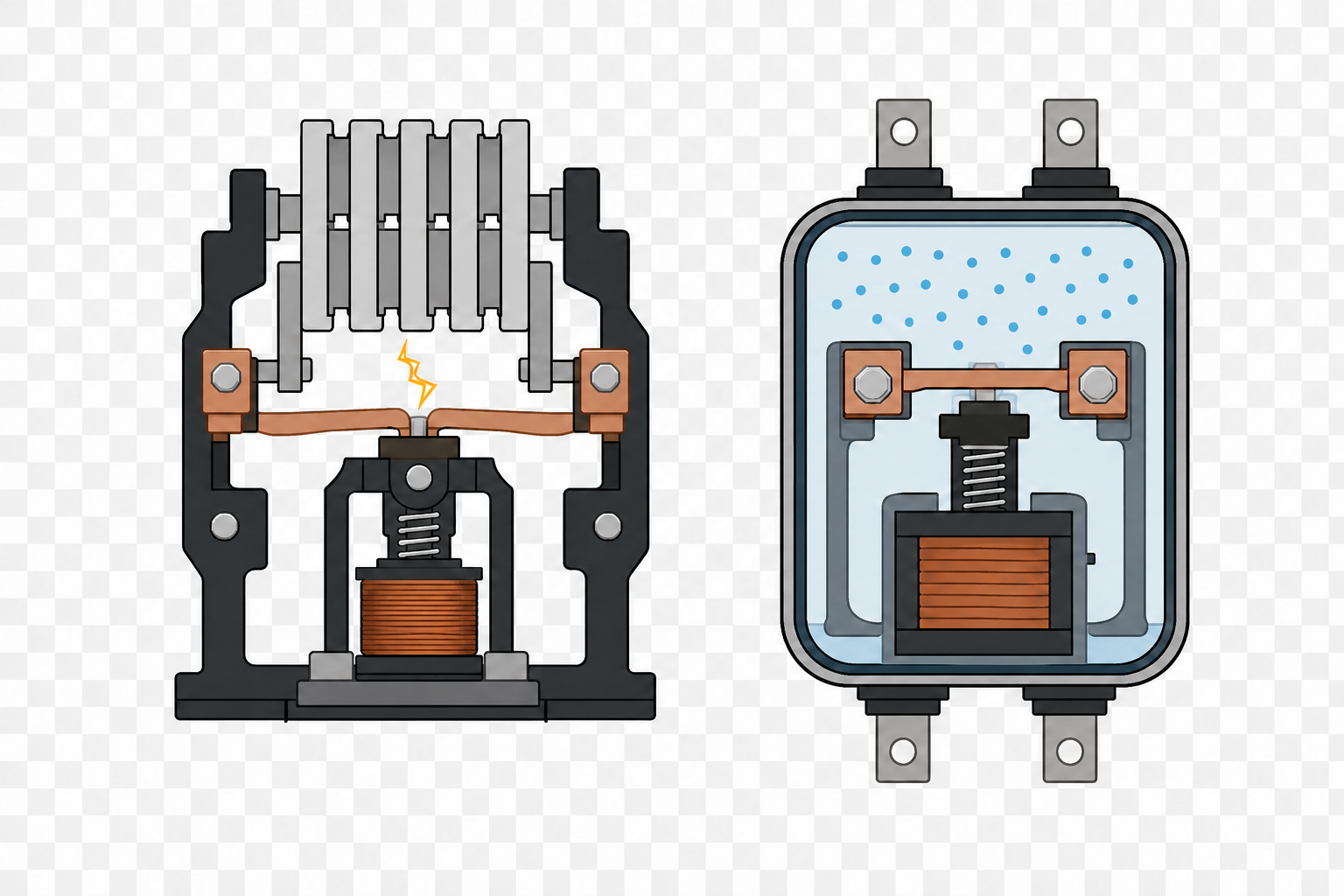
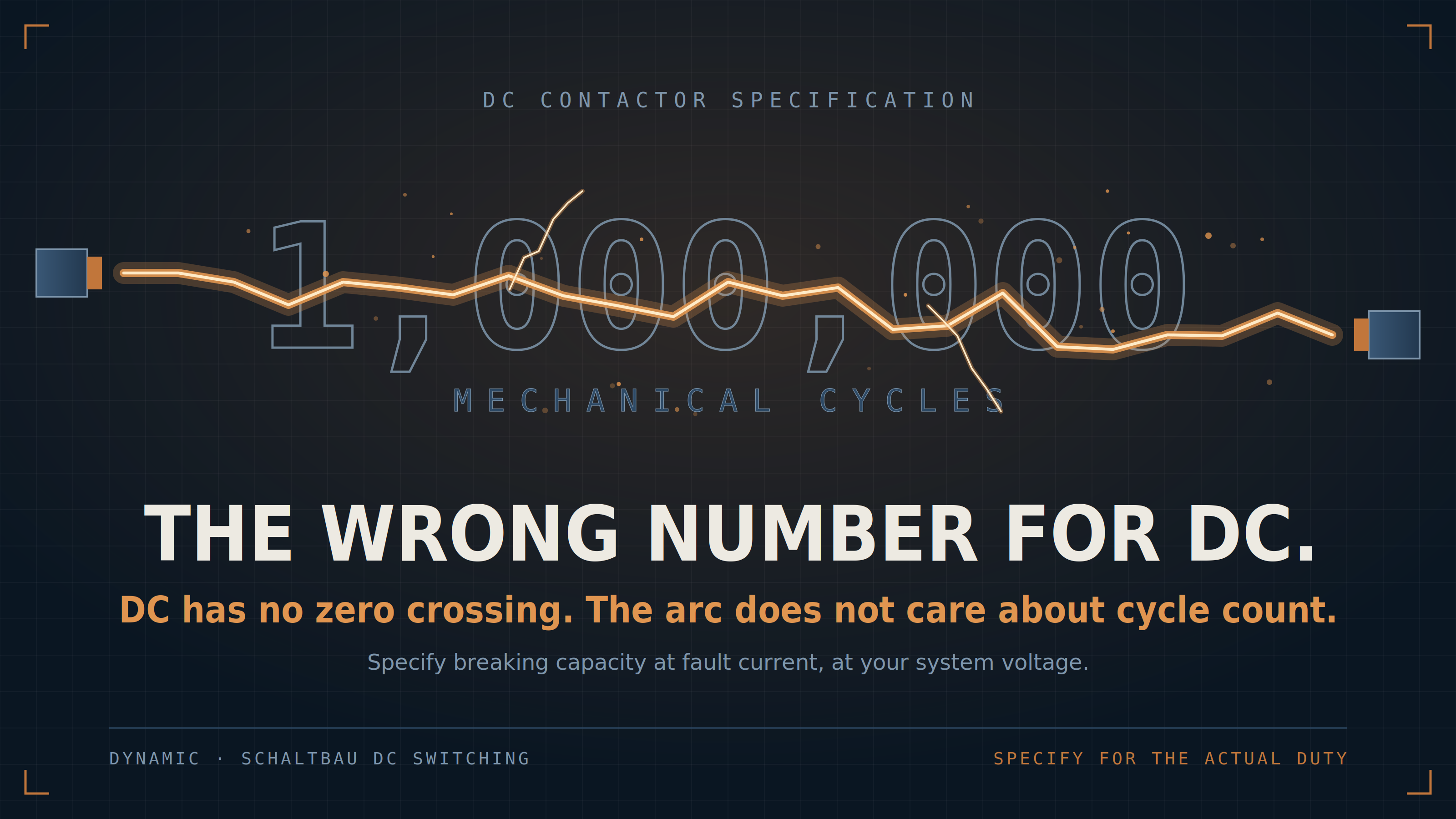
- DC switching and connectors. On DC power and energy storage, Schaltbau's C310 and C320 contactors are UL Recognized Components (file E116641), the LV battery connectors carry UL and CSA approval (file E242089), and most S8 snap-action switch series carry UL approval with UL 508 ratings. Recognized is not Listed, so bring us the part number and the duty and we'll confirm the mark and the rating before you design it in.
- Marking and cable entry. English wire markers and terminal labels can be printed in your shop on Conta-Clip's TTPCardMAX. When an IP-rated cable entry has to be restated as a Type rating, the Conta-Clip KDS split entry carries NEMA Type 1, 12 and 4X.
- The 50 Hz load that can't be re-rated. Premium PSU builds frequency converters. Bring us the load and we'll take the ratings and the certification question to the factory with you.
Talk to someone who's done this
Got a foreign-built machine on the dock, or one on order? Talk to us before the evaluator walks in.