
The questions this chapter settles
In the order a panel gets designedPower is decided early and lived with for the life of the machine. These are the five decisions, what each one costs you later if it is guessed, and the product line that answers it.
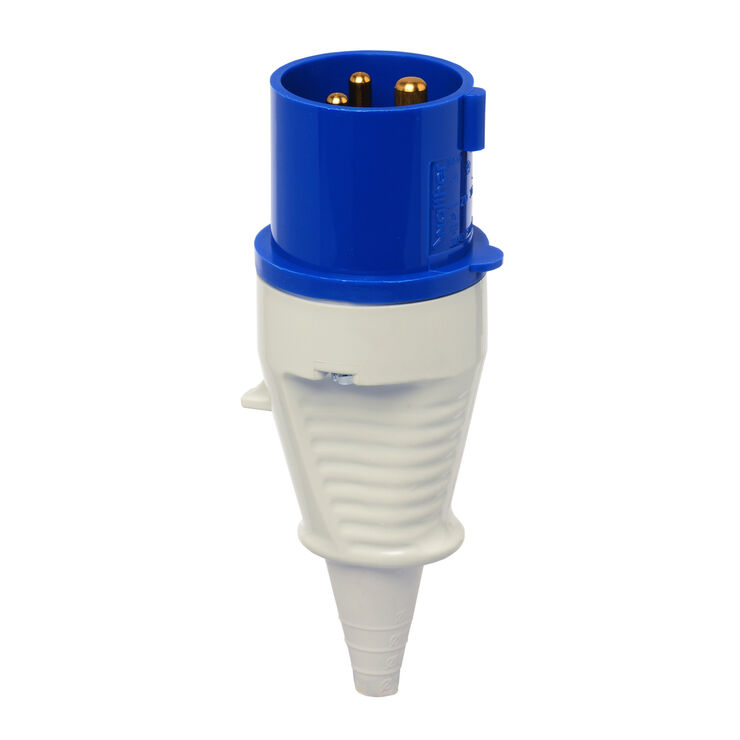
How does facility power reach the machine, and how does it come apart for service?
Cord and plug, a hard-wired whip, or a distribution box the crew rolls in. The choice decides who lands the feed, how the machine moves, and what the service tech unplugs.
Walther Electric IEC 60309 pin and sleeve. 3, 4 and 5 wire, splash-proof IP44 and watertight IP67. Cable assemblies and power cords UL approved, labeled and 100% tested, and Pagoda Box PDUs built with the receptacle mix the floor needs.
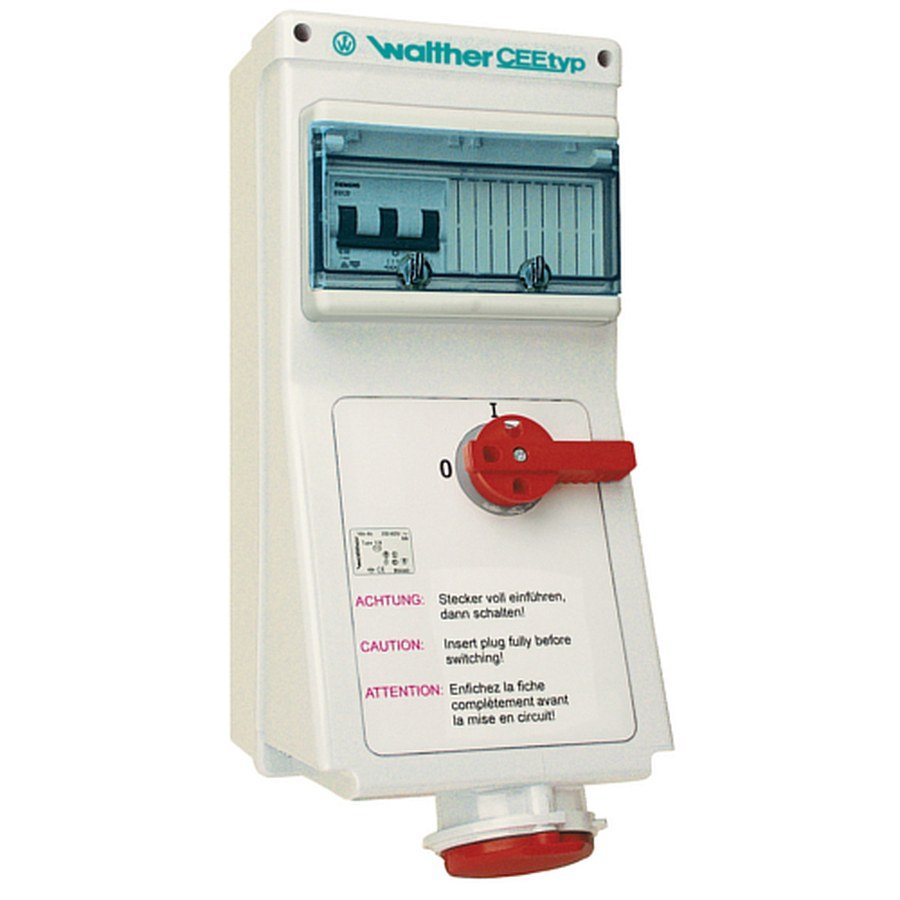
What stops someone opening the circuit under load?
A disconnect the plug cannot defeat. On a cord-connected machine that is an interlocked receptacle; on a hard-wired one it is a manual switch at the frame, and either way the handle takes a lock.
Walther mechanically interlocked receptacles and 30, 60 and 100 A disconnect switches. The receptacle and the switch are one unit: the circuit cannot be made or broken under load. For AC and DC isolation beside it, IMO mechanical disconnects and the SI series true DC isolator.
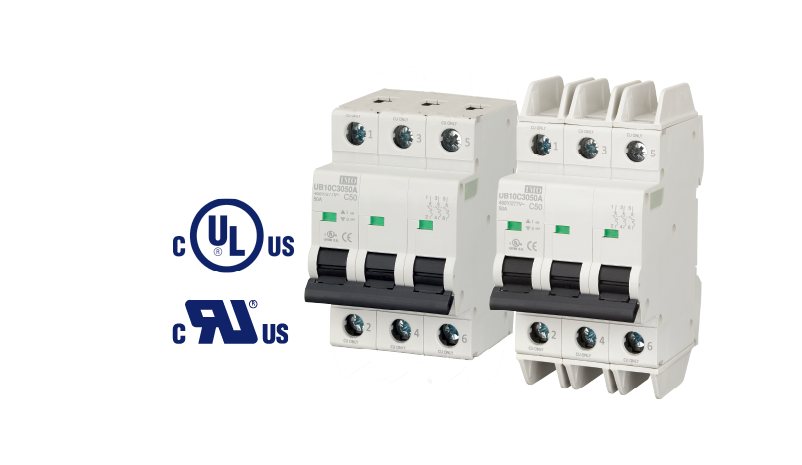
Which breaker goes on each branch, and is it UL 489?
The branch breaker is what the inspector reads first. Its listing, its curve and the fault current it clears decide whether the panel passes and whether a nuisance trip takes the line down.
IMO Automation UL 489 miniature circuit breakers. Motor circuit breakers, RCBOs and surge protection from the same catalog, so the protection chain is one vendor and one curve family.
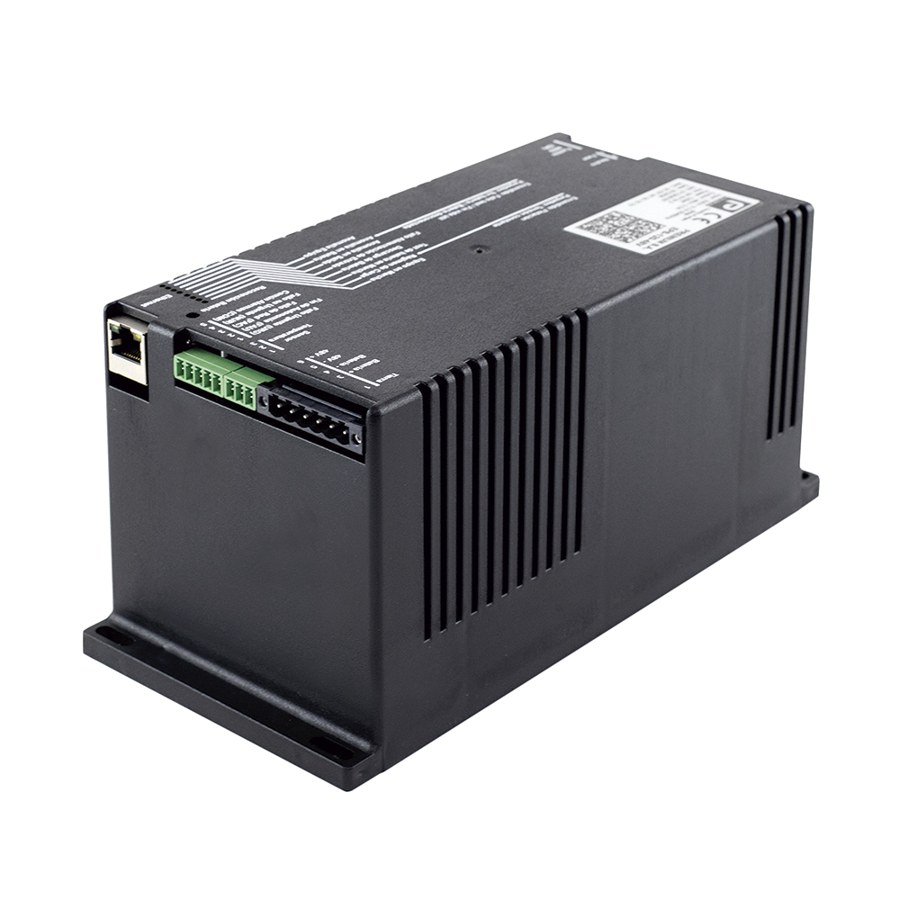
How is the 24 V bus made, and what happens on a dropout?
Every controller, I/O block and sensor lives on it. The supply decides how much heat the enclosure absorbs and whether a brownout reboots the machine or passes unnoticed.
Premium PSU GaN AC/DC supplies, DC/DC converters and DC UPS. Custom supplies from 50 W to 60 kW, DC/DC 60 W to 2 kW standard, and a 500 W DC UPS that guarantees power through an unexpected AC outage. More watts per inch, less heat to dump.
What opens and closes the AC load, and for how many cycles?
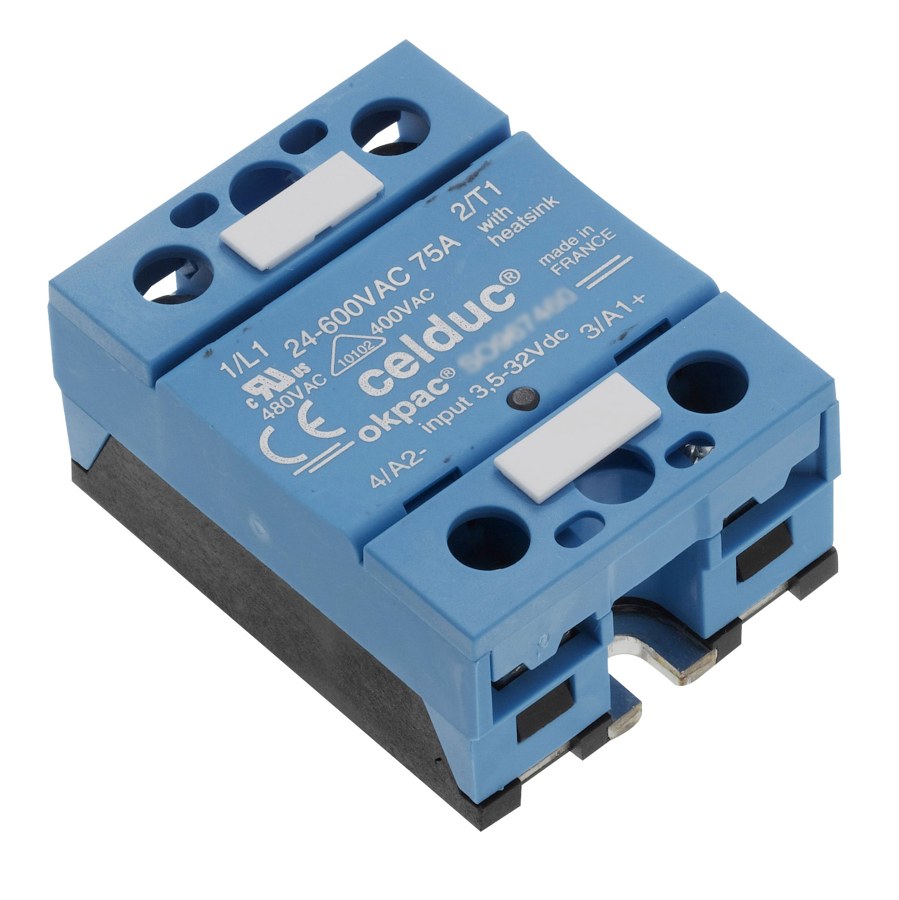
A heater, a motor or a lamp bank switched thousands of times a shift wears a mechanical contact. Solid state has nothing to wear, but it has a heat budget the panel has to carry.
Celduc solid state relays and IMO contactors. Single to four phase SSRs in 45 mm okpac and 22.5 mm DIN-rail celpac packages, with SOD and SILD versions with heater diagnostics. IMO contactors from compact through heavy industrial frames where a mechanical contact is the better part.
What breaks DC under load?
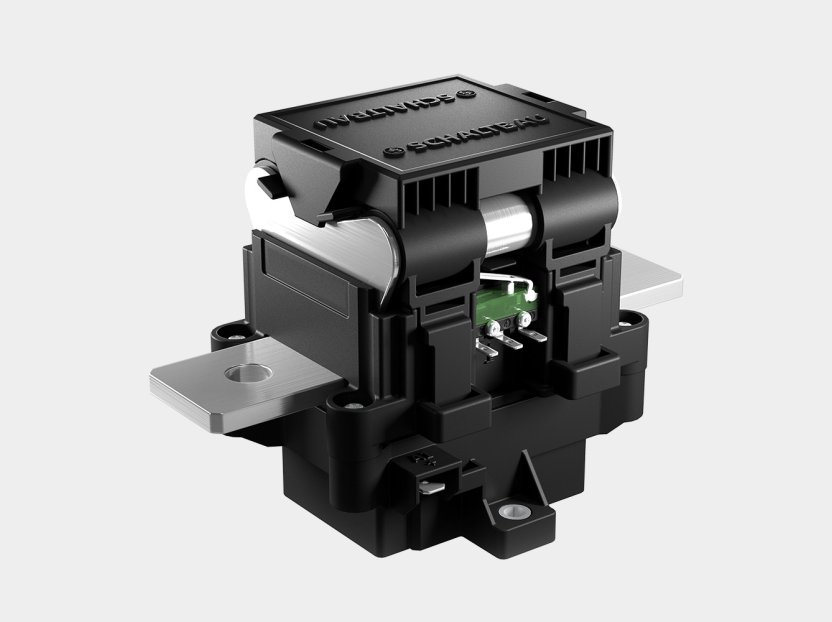
DC has no zero crossing, so the contactor has to stretch and cool the arc itself. Ask what a contactor breaks under load, not only what it holds; the two numbers are not the same.
Schaltbau DC contactors with permanent-magnet arc blowout. 1 kV to 3 kV, battery contactors, 1500 V and 3000 V contactors, for battery storage, chargers, DC distribution and test benches. Celduc DC SSRs to 1700 Vdc and 150 A where the duty suits solid state.