A lift station is a small building nobody works in. The pumps run, the wet well rises and falls, and the only people who see the inside are the ones who drive out when something goes wrong. So the real cost of a fault at a remote station is rarely the part. It is the truck, the drive and the hours spent finding out what happened.
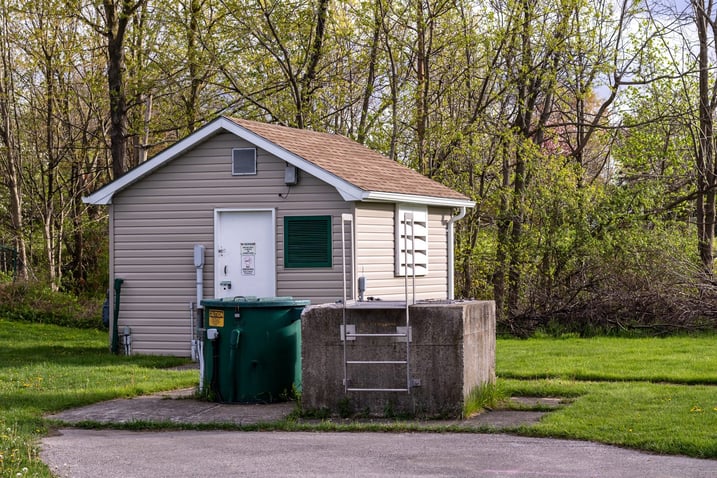
Most of the time the station already knew. The trouble is that it had no way to say so.
What the station knows that SCADA never sees
The signal list for a pump station is set when the station is designed: pump run, pump fail, high wet well, power fail, a level, maybe a flow. That list goes into the PLC program and the SCADA tag database, and there it stays.
Everything added or noticed after that sits in the cabinet unreported. The flow meter keeps a totalizer behind an RS-485 port nobody connected. The drive logs its own faults on a serial port of its own. The generator has run and fault contacts, the transfer switch has a position contact, and somebody added a hatch switch after the last break-in. A gas detector puts out 4 to 20 mA that only lights a local alarm.
Getting any of it back to the control room normally means opening the PLC program: new I/O, new tags, a test, and a site visit from whoever owns the program, which is often an integrator working under someone else's contract. So the data stays in the cabinet, and the next fault is found the same way as the last one, by driving out.
A second path beside the PLC
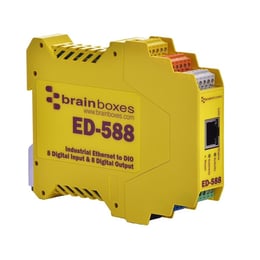 There is another way in. Brainboxes Ethernet remote I/O and Ethernet to serial devices mount on the DIN rail beside the PLC, pick up the signals at the terminal blocks, and put them on the station's own Ethernet network. The digital I/O modules present their points as Modbus TCP devices, so the SCADA master or a separate monitoring server polls them directly.
The PLC program is never opened. The pumps run on the logic that was tested and accepted, and the extra data arrives on a path of its own.
Stuck between the PLC and the data you need?
Every station is a little different: who owns the PLC program, what the SCADA master can poll, what the site's communications can carry, and what the owner will sign off on. Those are the conversations we have every week with panel builders and integrators. Bring us the station and the question, and we will work through it with you and with Brainboxes to find the path that works for you and for the owner.
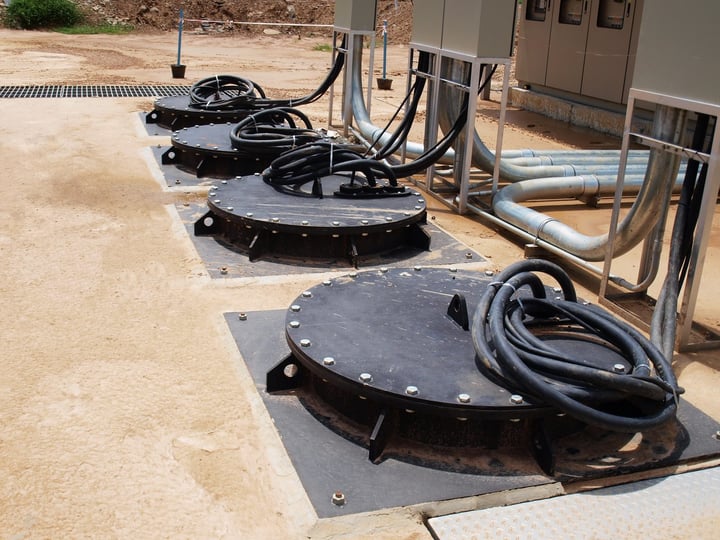
The pumps sit below the hatches. The signals worth having are in the cabinet beside them.
Five things worth bringing back from a station
1. The contacts already in the panel. Generator run and fault, transfer switch position, seal leak, hatch or intrusion switch, the backup float. Each one is a dry contact that a digital input module reads as it is, with no change to the wiring that already uses it.
2. Analog signals the PLC never had. A second level transducer as a check on the first, a gas detector's 4 to 20 mA output, a current transformer on a pump motor. An analog input module reads voltage or 4 to 20 mA signals and puts them on the network.
3. The serial port on the flow meter or the drive. An industrial Ethernet to serial device puts that RS-232 or RS-485 port on the network, so the software that already knows how to talk to the meter reaches it over Ethernet instead of a laptop on site.
 4. Temperature where it matters. The control panel in afternoon sun, the motor windings, the generator room. RTD and thermocouple modules read them as temperatures.
5. A known state when the network drops. On the Brainboxes digital output modules, one write sets the whole output bank, and that pattern can be stored as the power-on and watchdog safe state. A local alarm beacon or a status light on the monitoring layer goes to a known state on power-up or when communications are lost.
For the panel builder and the skid builder
The cheapest time to add this path is on the drawing. A remote I/O module and a few terminals cost very little in a new pump station panel or on a packaged treatment skid, and the station ships with a data port the owner's IT already understands, as a part number on your bill of materials. The PLC you programmed and tested is never touched by it.
The DIN rail units run from a 5 V DC supply, or from any DC supply up to 30 V already in the panel, and the industrial Ethernet to serial units are rated from -40 to +80 C.
Potential use cases, device by device
These are the Brainboxes devices that fit the jobs above, and where each one could be used in a station panel or on a skid.
| Device | What it is | Where it could be used |
|---|---|---|
| ED-516 | 16 digital inputs | Generator, transfer switch, seal leak, hatch and backup float contacts |
| ED-588 | 8 digital inputs and 8 digital outputs | A small station: a few states read and a local beacon or status light driven |
| ED-527 | 16 digital outputs | Indicators and alarms on the monitoring layer, with a stored safe state |
| ED-549 | 8 analog inputs | A second level transducer, a gas detector output, pump motor current |
| ED-582 and ED-593 | RTD and thermocouple inputs | Panel, motor and generator room temperatures |
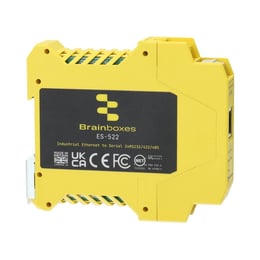
| ES-551 | Industrial Ethernet to serial, RS-232, RS-422 or RS-485 on screw terminals | The unused serial port on a flow meter, a drive or an analyzer |
| Industrial Ethernet switches | DIN rail switches | Keeping the monitoring devices on their own network inside the station panel |
Each device name opens its Brainboxes product page with the full datasheet.
Which one fits depends on what the station already has in the cabinet, and that is the first thing we ask.
Questions worth asking before you pick a path
- What does the station already know that the control room never sees?
- Who owns the PLC program, and what does a change cost the owner and the integrator?
- Where does the extra data need to land: SCADA, a separate monitoring server, or the maintenance crew's phones?
- Is this for every new station or skid you build, or a retrofit on stations already in service?
- What communications leave the site today, and how much more can they carry?
Our building, facility and site systems page lays out the rest of the product lines we carry for pumps, panels and sites, and the Brainboxes page has the full range.
At Dynamic we represent power, control and measurement lines for machine builders, panel shops and integrators in Northern California and Northern Nevada, and we are Brainboxes' rep across the territory. We help at the schematic and bill-of-materials stage, where a data path is cheapest to add.
Working through a station or a skid right now? Tell us what you are connecting and we will come back with a part list.