
Dynamic Measurement and Control Solutions
    • Applications
      • Industrial Automation & Production Equipment
      • Semiconductor & Test Equipment
      • Robotics, Robot Cells & Mobile Robots
      • Food, Beverage & Process Equipment
      • Life Sciences, Medical & Laboratory Equipment
      • Commercial, Self-Service & Public-Use Equipment
      • Transportation, Mobility & Vehicle Systems
      • Heavy Equipment, Mobile Machinery & Outdoor Systems
      • Energy, Power & Electrification Systems
      • Data Centers & Digital Infrastructure
      • Building, Facility & Site Systems
    • Products
    • Design Path
      • The Design Path
      • Design Once, Build Many
      • Power That Performs
      • Machine Intelligence & Control
      • Industrial Data Pathways
      • Wired to Last
    • The Detail
    Dynamic Measurement and Control Solutions
    Opens mobile navigation.

    Click to call. 4087809190

    • Applications
      • Industrial Automation & Production Equipment
      • Semiconductor & Test Equipment
      • Robotics, Robot Cells & Mobile Robots
      • Food, Beverage & Process Equipment
      • Life Sciences, Medical & Laboratory Equipment
      • Commercial, Self-Service & Public-Use Equipment
      • Transportation, Mobility & Vehicle Systems
      • Heavy Equipment, Mobile Machinery & Outdoor Systems
      • Energy, Power & Electrification Systems
      • Data Centers & Digital Infrastructure
      • Building, Facility & Site Systems
    • Products
    • Design Path
      • The Design Path
      • Design Once, Build Many
      • Power That Performs
      • Machine Intelligence & Control
      • Industrial Data Pathways
      • Wired to Last
    • The Detail

    Let's get in touch

    Fill out this form, and we'll contact you soon.

    Design Path chapter 4 of 5. Foundation.

    Wired to Last

    Where the schematic meets the panel. How power and signals land on the rail, how the cables get through the wall with their connectors on, and the cords and connectors the machine leaves the shop with.

    Conta-Clip on the rail and at the wall, Walther Electric on the frame and at the end of the drop. Looks simple. Fails first.
    Start a design reviewWalk the design path

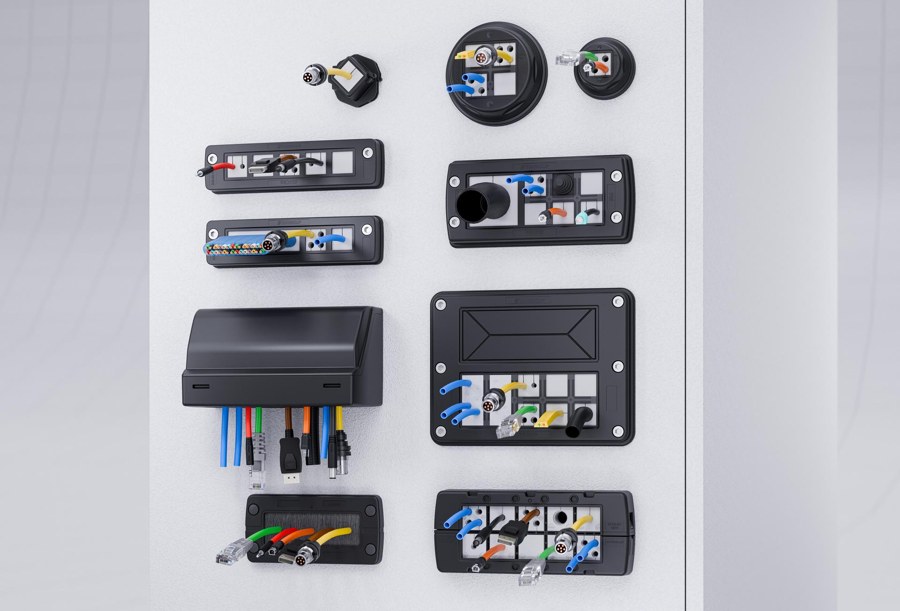
    Conta-Clip KDS split cable entry with pre-terminated cables
    Conta-Clip KDS split cable entry: the cable goes through the wall with its connector on
    IP66Conta-Clip KDS split cable entry, UL Recognized, with the connector already on the cable
    100% testedWalther cable assemblies and power cords, UL approved and labeled
    -40 to +120 CKDS split entries, sealed to IP66 across the range
    Up to 32 conductorsConta-Clip KES hygienic entries, elastomer built to FDA food-contact requirements

    The questions this chapter settles

    From the rail to the end of the drop

    These are the parts nobody argues about on the drawing and everybody argues about at commissioning. Six decisions, what each costs when it is guessed, and the product line that answers it.
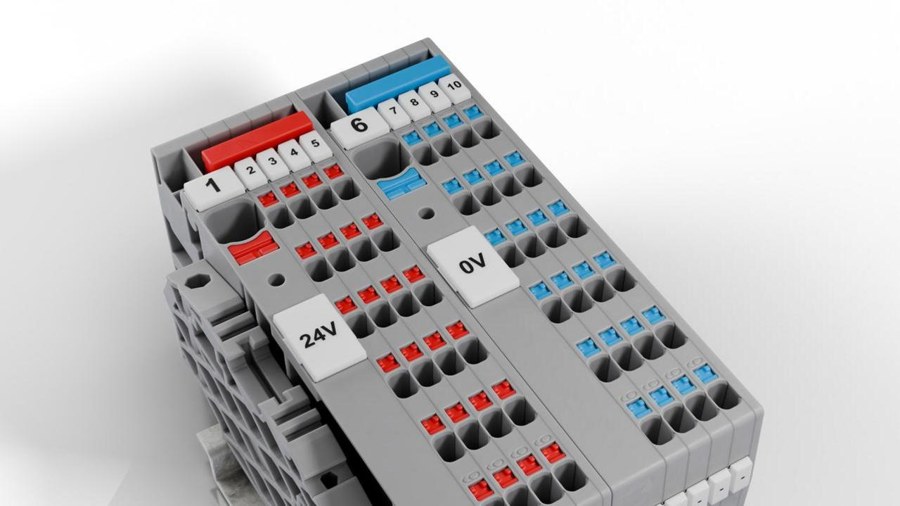
    Conta-Clip PPVK push-in terminal block
    Conta-Clip

    Push-in or screw: how do the wires land on the rail?

    Push-in wires faster and needs no torque check; screw is what some specs still call for; spring holds under vibration. The choice sets the panel build time and how the field tech services it.

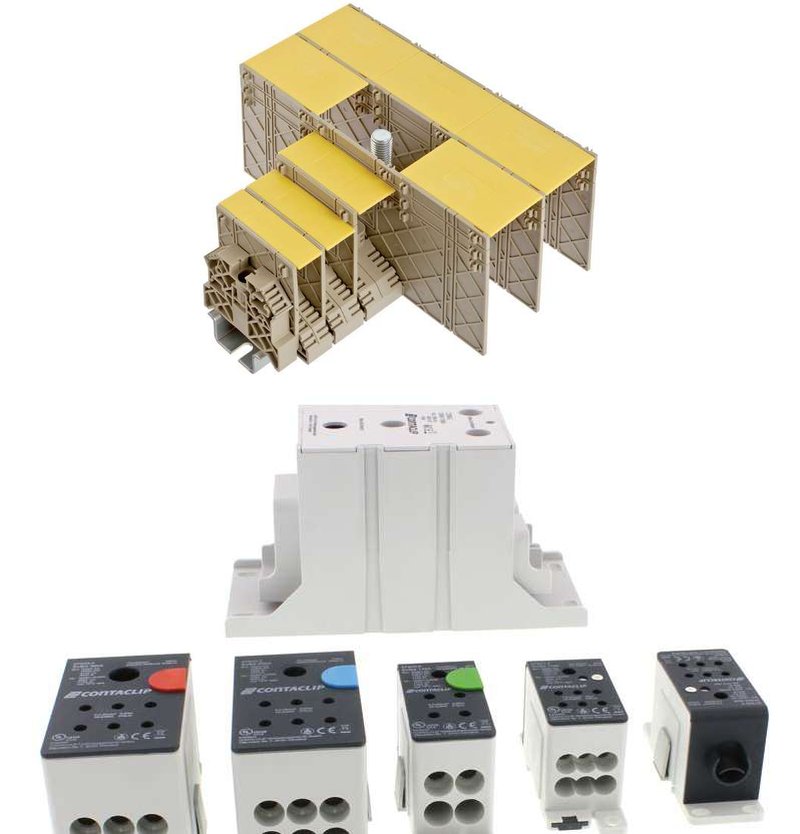
    Conta-Clip PPVK push-in DIN-rail terminal blocks. Screw, spring cage, push-in and stud connections on one rail system, finger-safe power distribution blocks for the splits from the feed, and spring-clamp blocks that hold under vibration.
    Conta-ClipStage 05 on the design path

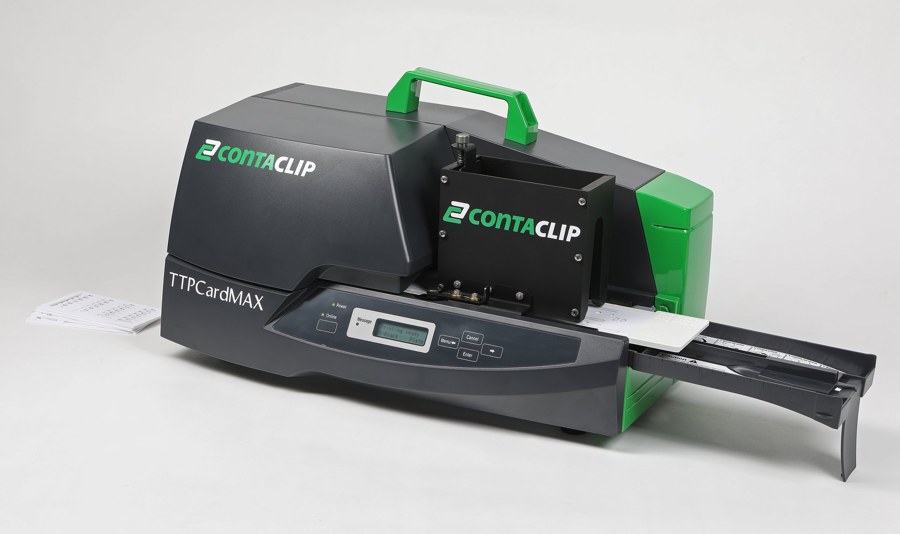
    Conta-Clip TTPCardMAX marking printer
    Conta-Clip

    Can the field tech read the panel a year from now?

    Only if the wire number on the drawing is the one on the block. Marking printed in-house from the drawing is the difference between a ten-minute fix and an afternoon with a meter.

    Conta-Clip TTPCardMAX marking. Marking and component identification printed in the shop, for the blocks, the wires and the devices, so the panel the drawing describes is the panel in the field.
    Conta-ClipStage 05 on the design path

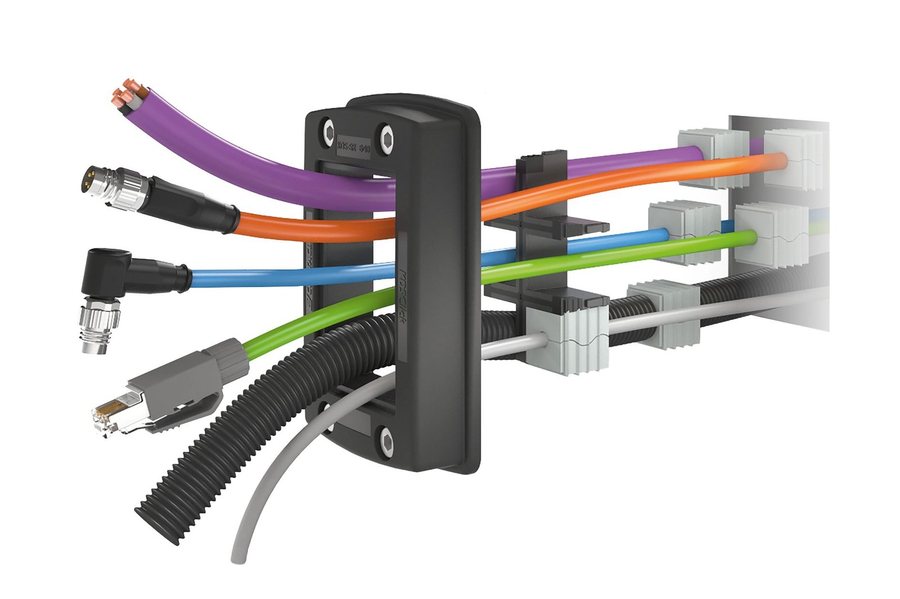
    Conta-Clip KDS split cable entry
    Conta-Clip

    How do pre-terminated cables get through a sealed wall?

    Through a split entry, without cutting the connector off. The cable that arrived tested stays tested, and the enclosure keeps its rating.

    Conta-Clip KDS split cable entry. The cable goes through the frame with its connector on, the wave-cut seal closes around it, and the frame holds IP66. UL Recognized, one frame in place of a row of glands, seals swapped from outside.
    Conta-ClipStage 13 on the design path

    Conta-Clip rail components
    Conta-Clip

    Which field signals need isolation or a relay before the controller?

    A long run, a noisy drive beside it, a different voltage at the far end: each wants something between the field and the input. Decide it on the rail, not at commissioning.

    Conta-Clip signal conditioning and interface relays, Celduc reed relays. Isolation, conversion and interface relays on the same rail as the blocks; Celduc reed relays and low-power solid state relays where the signal needs a contact with nothing to wear.
    Conta-ClipCelducStage 12 on the design path

    Walther Electric power distribution assembly
    Walther Electric

    What does the machine leave the shop with: a cord, a drop or a whole PDU?

    A cord the customer plugs in, a finished drop to length, or a distribution box with the receptacle mix the floor needs. Built as a listed assembly, the listing question leaves the field.

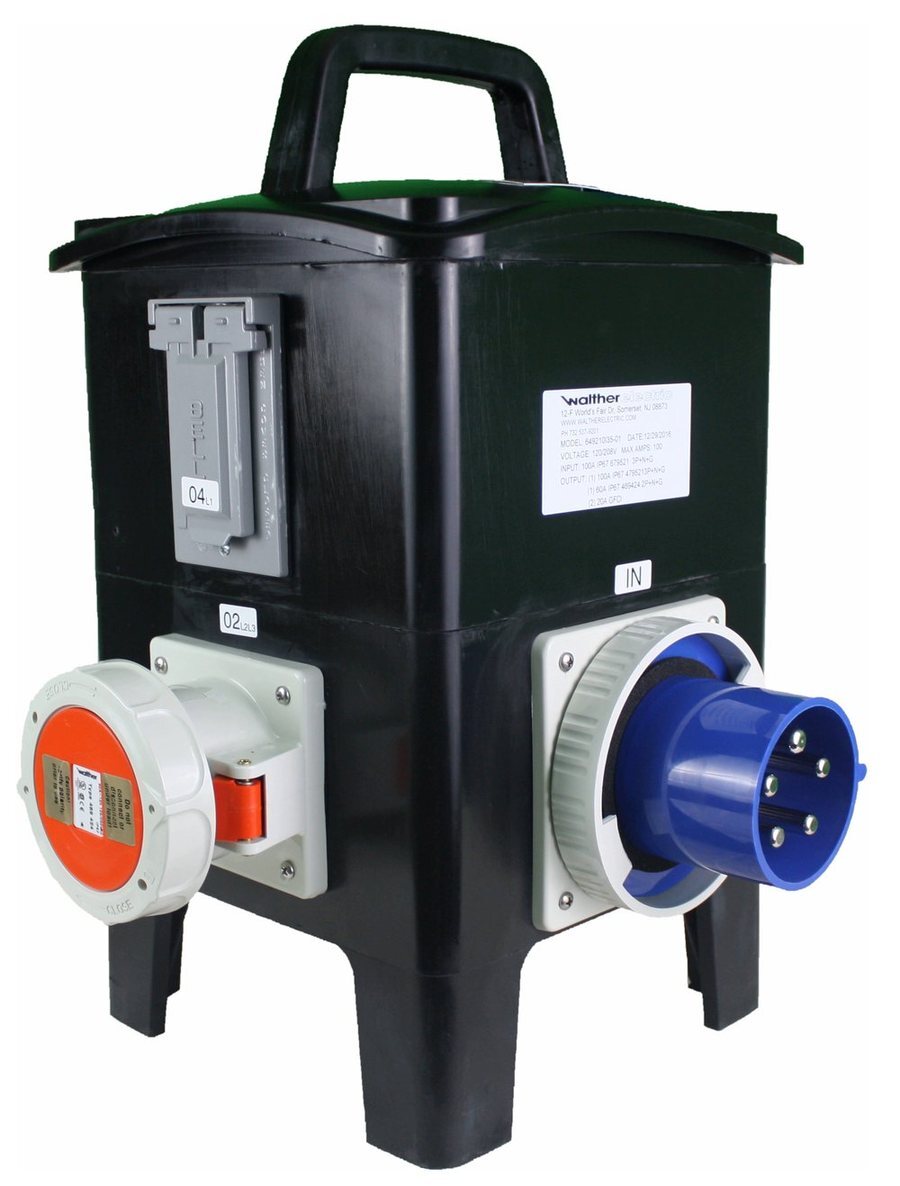
    Walther Electric cable assemblies, power cords and Pagoda Box PDUs. UL approved, labeled and 100% tested: IEC, NEMA, CS and CAMLOK. Distribution assemblies with breaker protection built in, shipped wired, and finished drops built to length in Somerset, New Jersey as a UL-listed assembly.
    Walther ElectricStage 13 on the design path

    Walther Procon heavy-duty rectangular connector
    Walther Electric

    Where does the machine split for shipping, and how does it go back together?

    At a connector that carries power and control through one hood, so the sections ship separately and the customer's floor mates them without a wiring crew.

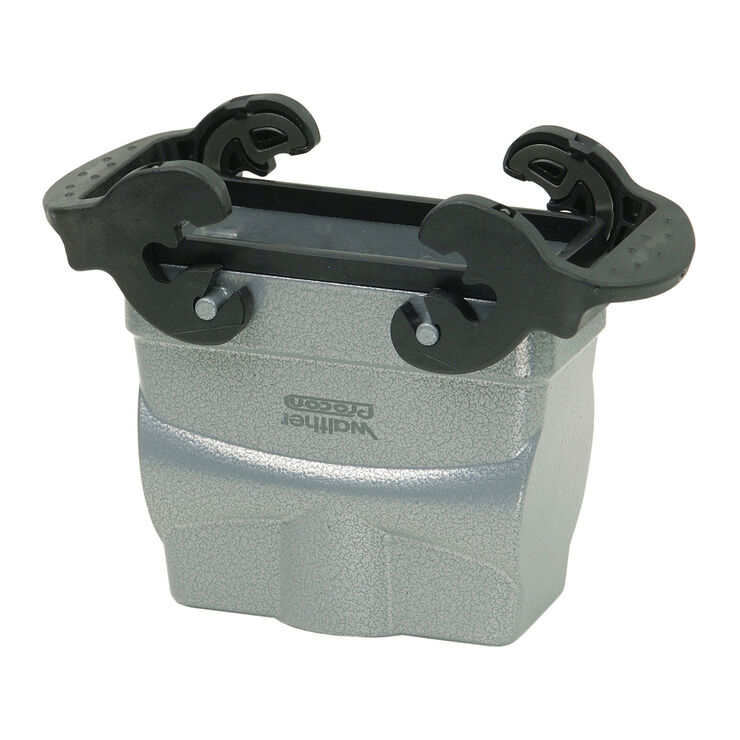
    Walther heavy-duty rectangular connectors. Procon connectors: mate the inserts, snap the hood and energize. Inserts for power, signal and Ethernet in one frame, washdown versions to IP68, housings in aluminum, zinc and plastic.

    Walther ElectricStage 13 on the design path

    Where this chapter sits

    The fourteen stages a machine gets designed in; this chapter owns the highlighted ones
    01Incoming power02Main disconnect03Measure the power04Branch protection and surge05Distribution and termination06DC control power07Switching the load08Drives09Controller10Operator interface11Machine data and network12Signal conditioning and isolation13Cable entry and field connectors14Field devices

    Stage 05 lands what chapter 1 protected; stage 13 decides whether the enclosure rating survives the first service call. The cords and PDUs at the end of the drop are the same Walther parts that start the path at stage 01.

    Where the rating stopsIP67 is hose-down; IP68 is the Procon versions rated for it. A high-pressure, high-temperature CIP zone is a question for us before it is a part number.
    Pre-terminated beats field-terminatedA cable that arrives with its connector on was tested once, at the shop that built it. A split entry passes it through the wall without cutting the connector off, so that test still means something at commissioning.
    Challenge usAfter 30-plus years in the industrial hardware space we know these products, on our line card and off it. Bring us your most stringent or most mundane requirement. If one of our product lines fits, we will show you where. If it does not, we know someone who will. We would be happy to help.

    Where it lands

    Every panel and every machine that ships. Where it bites hardest: a robot cell that splits into sections for shipping, a mobile machine that vibrates for a living, a washdown line, and a data center rack row that arrives as a built unit with its drops.

    RoboticsHeavy equipmentFood and beverageData center

    Read the detail

    • Screw, spring or push-in: choosing a DIN-rail terminal block type
    • Requirements for proper cable gland specification
    • Industrial connector types: contacts, housings, applications

    The other chapters

    Power That PerformsMachine Intelligence & ControlIndustrial Data PathwaysDesign Once, Build Many

    Every product line on one page

    Questions engineers ask us

    Straight answers on wired to last
    Push-in, spring or screw terminal blocks: which one?

    Push-in for build speed and no torque check, spring cage where vibration is the enemy, screw where the spec or the customer's standard still calls for it. Conta-Clip's rail system carries all three plus stud terminals for the big conductors, so the choice can change per circuit without changing the vendor.

    Can I pass a pre-terminated cable through an enclosure wall and keep the IP rating?

    Yes. A Conta-Clip KDS split cable entry takes the cable through the frame with its connector on, the seal closes around it, and the frame holds IP66, UL Recognized, from -40 to +120 C. One frame replaces a row of glands and the seals swap from outside.

    What is a UL-listed cable assembly, and why does the listing matter?

    An assembly built, labeled and tested at a listed shop so the inspector reads the label instead of inspecting the crew's work. Walther Electric builds finished drops, cords and distribution assemblies that way in Somerset, New Jersey, 100% tested, so the listing question leaves the field.

    Do washdown machines need special cable entry?

    Yes. In the hygienic zone Conta-Clip KES entries carry an elastomer built to FDA food-contact requirements, a flat face with no dirt pockets, sealed to IP66; on the connectors, Walther Procon washdown versions are rated to IP68. IP67 is hose-down; a high-pressure, high-temperature CIP zone is a question before it is a part number.

    How do I keep the cable shield intact through the wall?

    Land it at the wall. A shield that stops at an ordinary gland is noise inside the panel. EMC versions of the glands and entries terminate the shield at the enclosure, so the drop enters sealed and the shield lands where it should; WISKA, a Conta-Clip brand, carries them beside the Brace conduit system.

    What does Dynamic do in a wiring design?

    We represent Conta-Clip, WISKA and Walther Electric in Northern California and Northern Nevada. Bring us the drawing set and the enclosure, and an application engineer works the rail, the marking, the entries and the cords through with you before the spec locks, with the parts quoted through the distributor you already buy from.

    Bring us the drawing set

    If anything on this page raises a question mid-design, whether that is the block type, the entry on a washdown wall, the shield at the gland or the cord the machine ships with, that question is exactly what we are for. A short technical conversation usually surfaces the options a datasheet does not.

    Start a design review Call (408) 780-9190

    Take the line card with you

    Every product line on two pages, laid out for the way a machine gets designed. Made for the drawing set, not the inbox.

    Download the line card (PDF)

    All product lines: www.dynamicrep.com/products

    • Contact Us
    • About Us
    • Our Story
    • Partner with Us
    ©2026 DMCS® -  All rights reserved. Privacy
    Dynamic Measurement and Control Solutions, LLC