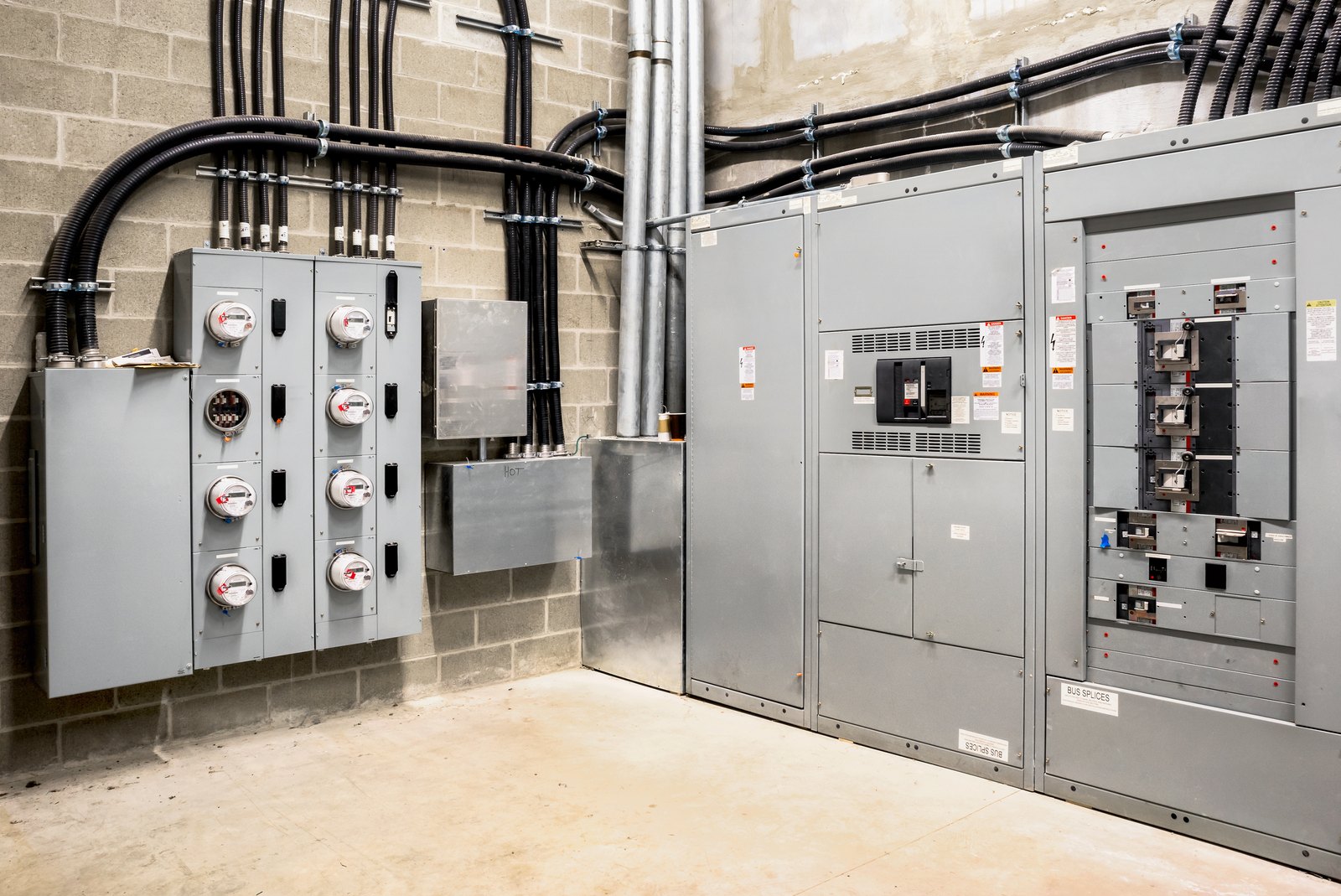
Three things change. The whip to the rack stops being a 30 A cord and becomes a 60 or 100 A listed assembly, and more of the room's distribution moves to DC at hundreds of volts. The parts that switch and protect that DC have to break an arc that never crosses zero, which is a different job from an AC breaker. And the metering has to read both the AC feeder and the DC bus, because the operator settles the bill on one and runs the hall on the other.
The conversation in the industry
Rack density is the number everyone is talking about. A single AI training rack now draws well over 100 kW, and the designs announced for the next generations are several times that. The conventional chain, utility to UPS to PDU to rack power supply, loses too much in conversion at those loads, so the reference designs shown at the Open Compute Project summit in October move distribution inside the hall to 800 V DC with fewer conversion stages. Little of that hardware is a listed, stocked catalog part yet, so the design decisions sit with the equipment builders.
The whip: heavier, fewer, and one listed part
Whatever happens on the DC bus, the AC feeds to the power rack, the CDU and the auxiliaries still end in an IEC 60309 device. What changes is the size and the count: a 50 A tap-box connector carries about 29 kW per drop against about 17 kW at 30 A, and a distribution box above the rack splits one 60 A feed into three 30 A outputs with a breaker on each. Walther Electric builds the whole run, receptacle to box, and ships the drop finished with the listing carried by the assembly, so the inspector sees one listed part instead of three. The devices are UL Listed and CSA Certified at 20 to 100 A, 125 to 480 V, and the assemblies are built in Somerset, New Jersey. The products are at Walther Electric on dynamicrep.com.
The room: switching DC under load, and reading both buses
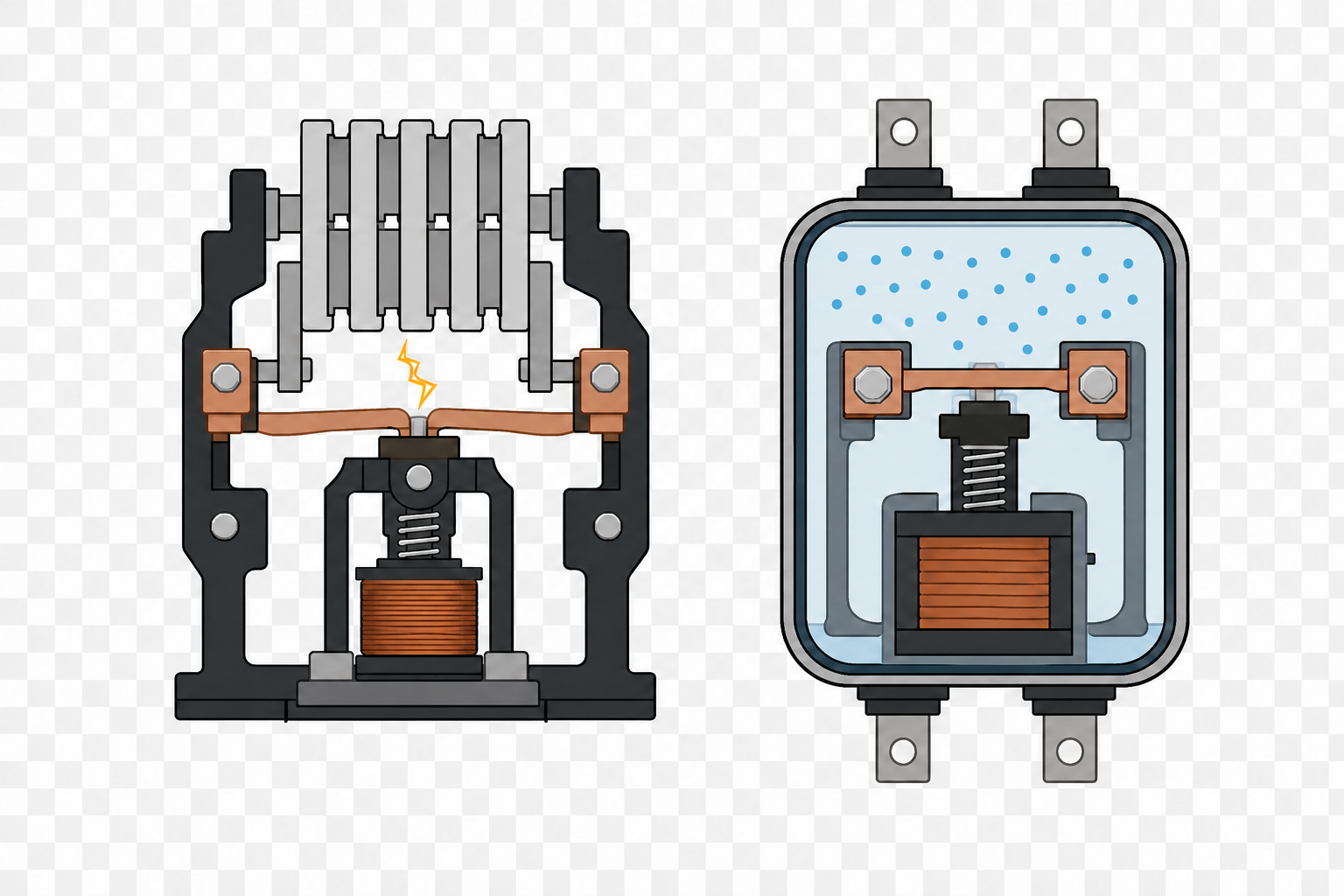
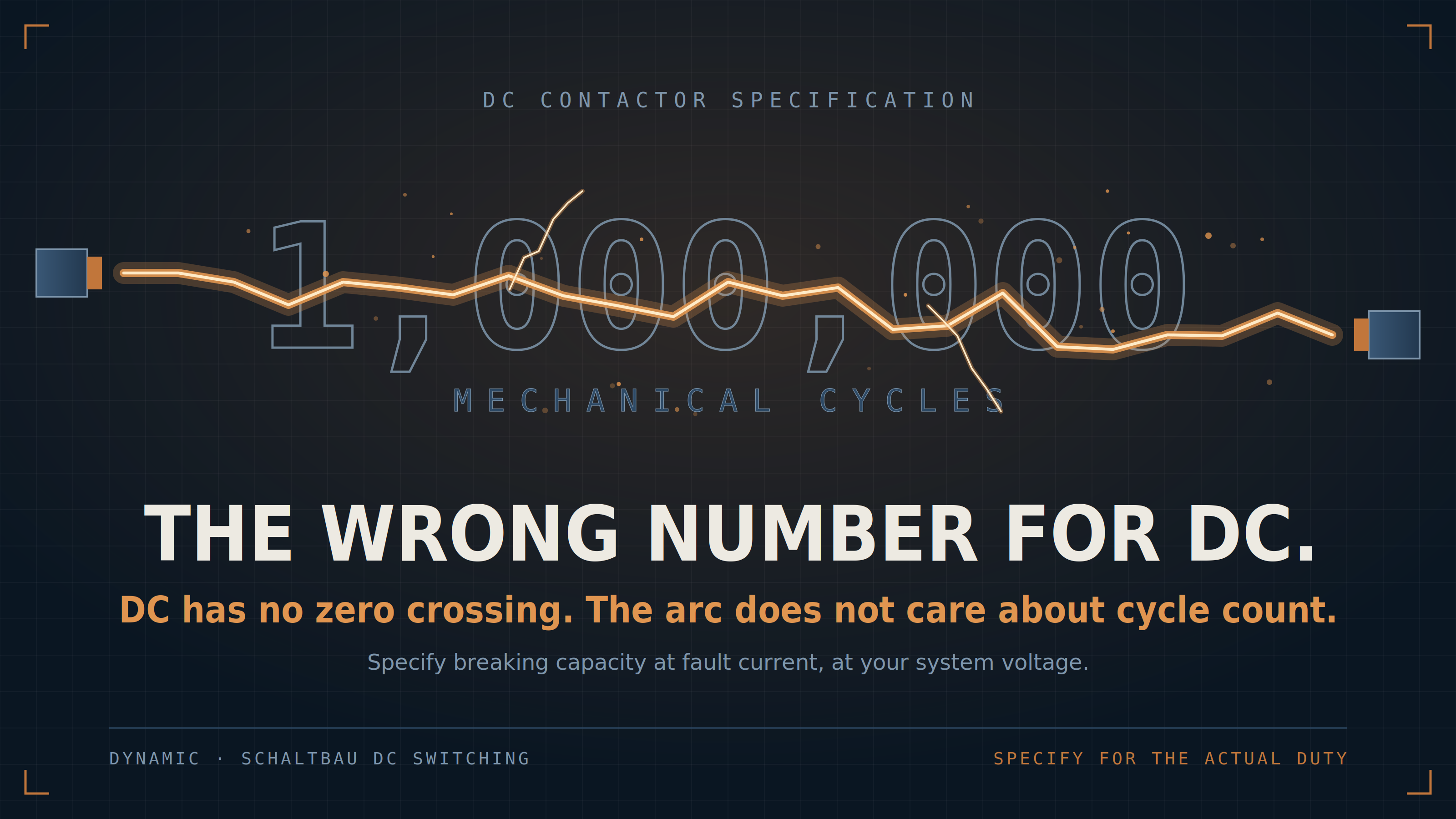
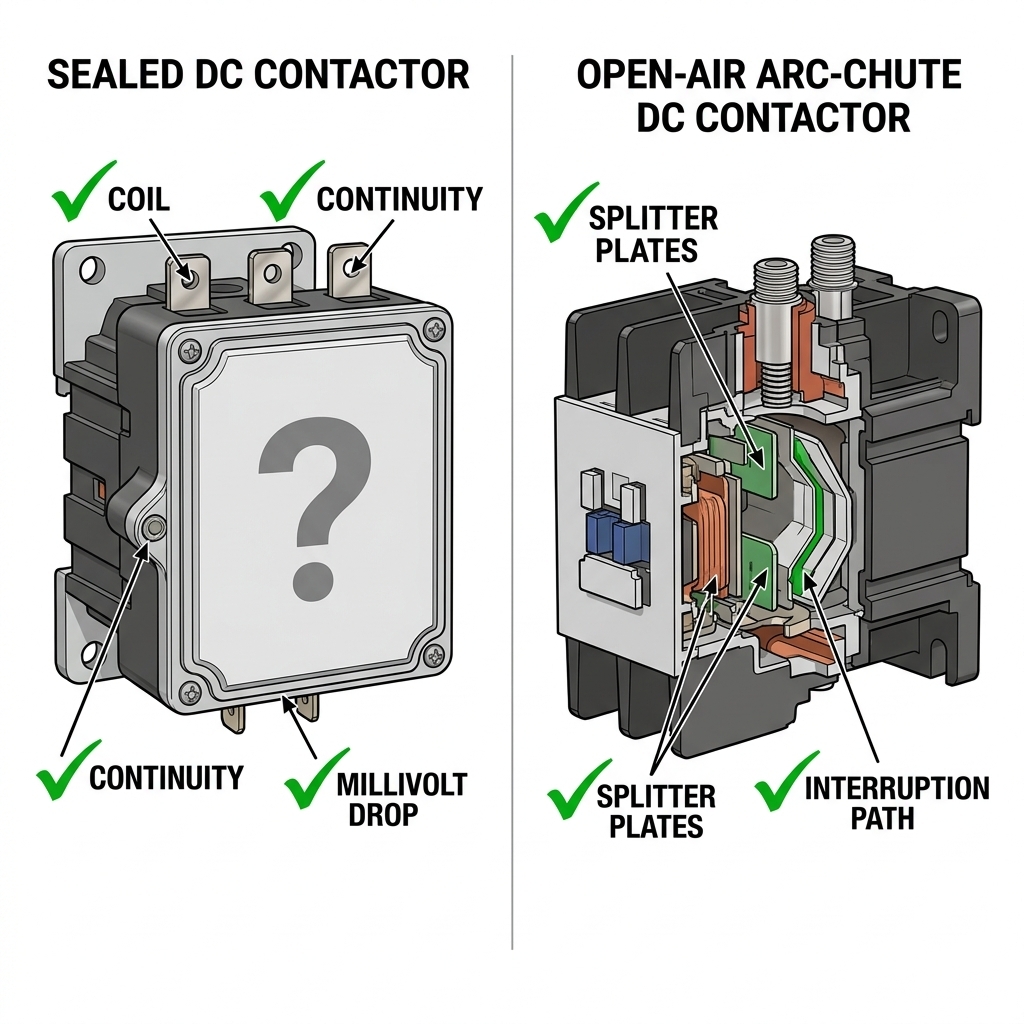
Once the distribution is DC, the hard part moves to the contactor. A DC arc has no zero crossing to help it out, so the device has to stretch and cool the arc itself, and the number that matters is break life at your voltage and current, not the headline cycle count, which is usually mechanical life with almost no arc. Schaltbau's C310 switches 1,500 V DC at 500 A with an open ceramic arc chute rather than a gas fill that can degrade over life, and the C310 and C320 carry UL Recognized Component marks to UL 60947-4-1 under file E116641, the paper a UPS or power-shelf builder needs for its own listing. The families are at Schaltbau DC contactors.
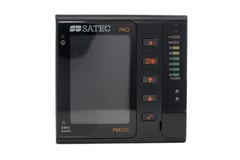 The metering has two jobs in the same room. On the AC feeder the operator still needs a revenue-class record and the sag that tripped a CDU with a time and a depth on file, and a SATEC PRO Series meter does both on one device. On the DC bus the same instrument family reads DC to 820 V direct, and to 1,500 V with the voltage ratio module, so both ends of a conversion stage land on one platform and the efficiency figure comes from one record. The meters are at SATEC on dynamicrep.com.
The rack and the cooling plant: conversion that fits the bus you have
Inside the rack the conversion chain belongs to the server builders and the power-shelf makers. Around the rack is where a custom conversion house earns its place. The pumps, fans and compressors of the cooling plant are the largest loads still on AC, and a Premium PSU inverter takes an 800 V DC bus straight to 400 VAC three-phase: the NP-0827 runs from 420 to 900 VDC at 70 kW peak. Going the other way, the BDS-50K is a 50 kW isolated AC/DC module rated at 800 VDC out, 97.3 percent efficient at 400 VAC in. These are released rail and industrial families with 750 V catenary heritage, and where a catalog unit does not match the spec, Premium has more than 900 custom designs behind it. The families are at Premium PSU on dynamicrep.com.
Challenge us
After 30-plus years in the industrial hardware space we know these products, on our line card and off it. Bring us your most stringent or most mundane requirement. If one of our product lines fits, we will show you where. If it does not, we know someone who will. We would be happy to help.
We represent Walther Electric, Schaltbau, SATEC and Premium PSU in Northern California and Northern Nevada. The data center page shows where each product line sits along the power path, and the data center line card is the printable version.
See the data center power path
Questions engineers ask
Does an 800 V DC bus mean the whips go away?
No. The AC feeds to the power rack, the CDU and the auxiliaries still end in IEC 60309 devices, larger, fewer and finished as listed assemblies.
Can an AC-rated contactor switch the DC bus?
A DC arc has no zero crossing, so the contactor needs a DC breaking rating at the system voltage and current; ask for break life at that duty.
Can one meter read both the AC feeder and the DC bus?
The SATEC PRO Series reads AC and DC, DC to 820 V direct and to 1,500 V with the voltage ratio module, so both ends of a conversion stage land on one record.