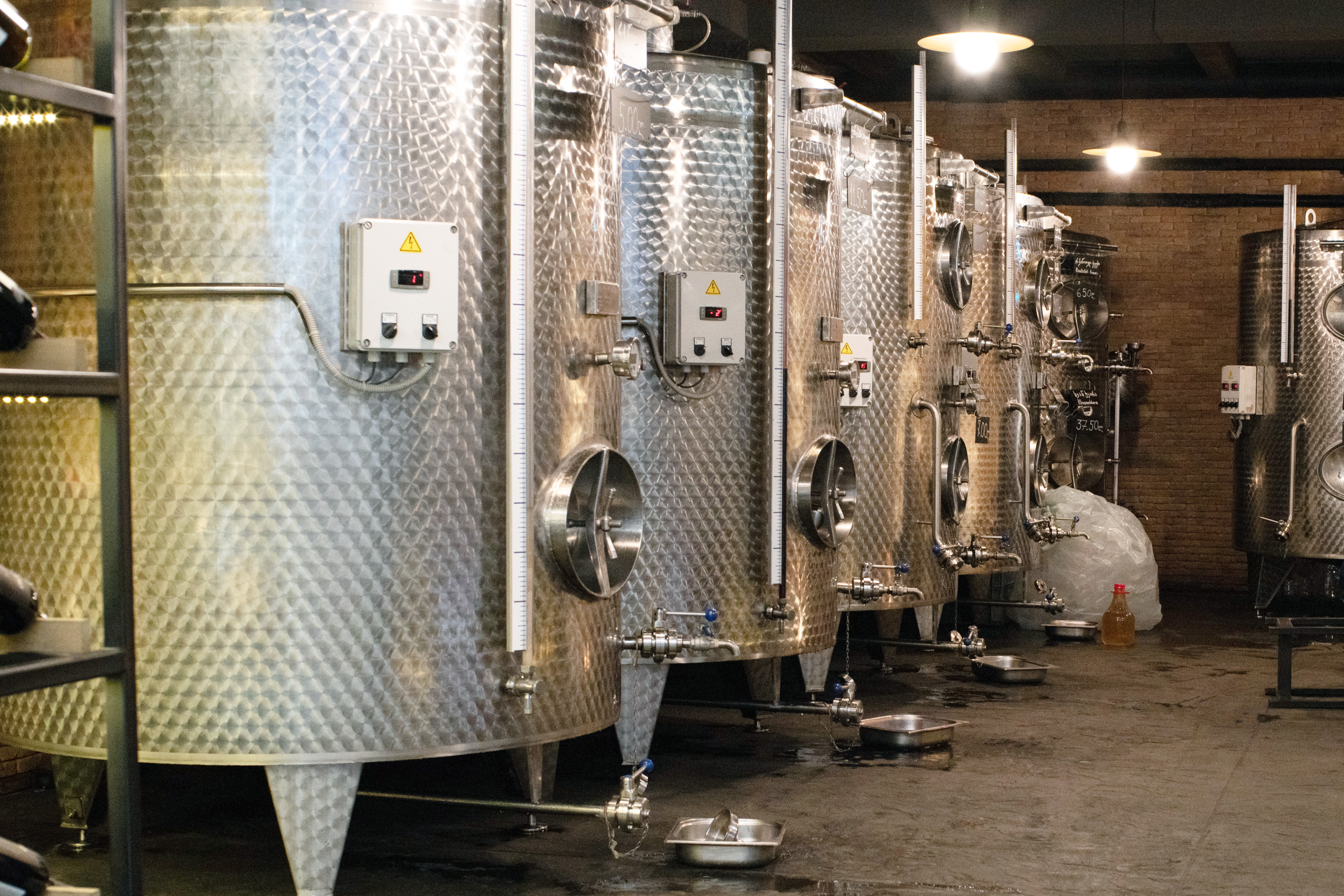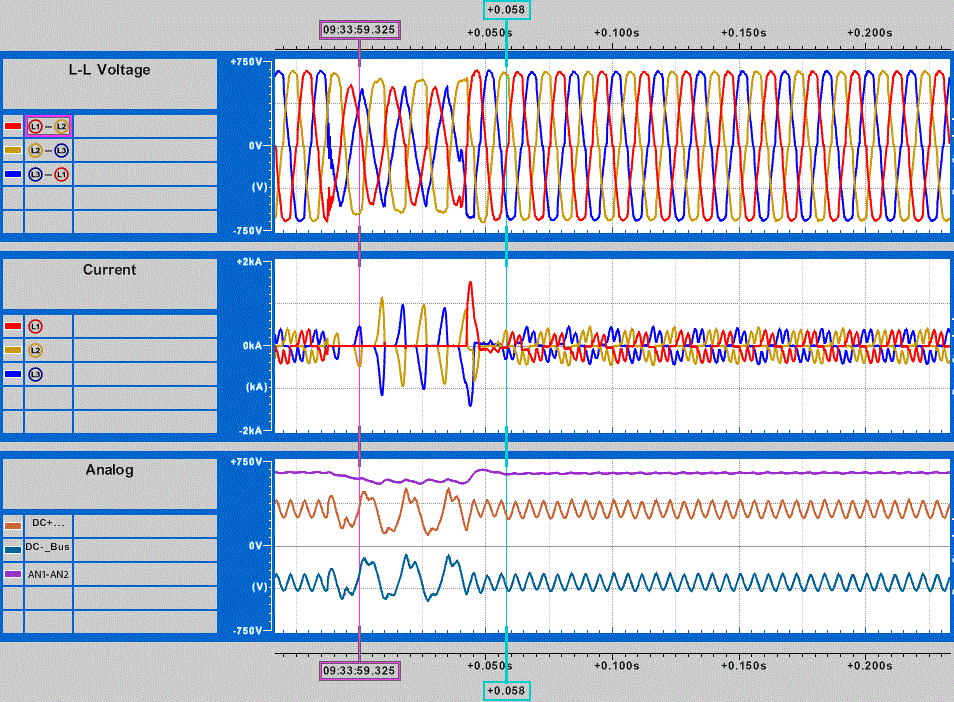
For most wineries, harvest pushes electrical systems to their limits. Temporary equipment, portable power, wet environments, and extended run times all introduce significant risks. The constant plugging and unplugging of connectors adds another layer of strain.
Once the crush is over and the quiet of winter settles in, many facilities turn their attention to upgrades, repairs, and essential maintenance. This off-season window is the ideal time to address electrical issues before they become costly problems during the next harvest.
This blog provides a practical framework for conducting an off-season electrical review. We will focus on safety, reliability, and ensuring your facility is ready for the demands of the upcoming season.
Why the Off-Season Matters Electrically
Electrical failures during harvest are rarely random occurrences. They are often the predictable outcome of issues that could have been addressed earlier. Common causes include:
- Temporary power systems being used beyond their intended capacity.
- Connectors and disconnects exposed to moisture, chemicals, and mechanical damage.
- Terminations loosening due to vibration and thermal cycling.
- Seasonal equipment being left in place without proper inspection.
Winter provides a low-pressure window to correct these risks. With operations scaled back, your team can perform thorough inspections and upgrades without the urgency and stress of the harvest season. Proactive maintenance now prevents downtime later.
Key Off-Season Electrical Maintenance Areas
Here is a practical checklist we use when walking wineries through off-season electrical reviews.
1. Facility Power Infrastructure
Begin with the backbone of your electrical system. A stable power infrastructure is crucial for smooth operations.
- Inspect: Check service entrances, panels, and subpanels for any signs of moisture, corrosion, or heat damage.
- Re-torque: Loosened connections are a common point of failure. Re-torque feeder and branch circuit terminations to manufacturer specifications.
- Verify: Confirm grounding and bonding continuity, especially at points where portable equipment is connected.
- Update: Ensure panel schedules and labels are accurate and reflect any modifications made during the last harvest.
Outcome: These steps help reduce nuisance trips, lower arc-flash risks, and ensure reliable startups for all your equipment.
2. Motor Disconnects and Safety Isolation
Motor disconnects are critical for safety but are often neglected until a failure occurs or service is required.
- Verify: Check that all motor disconnects are located within the line-of-sight of the equipment they control and are clearly labeled.
- Check: Test door interlocks and handle mechanisms to ensure smooth and positive operation.
- Inspect: Examine enclosure seals in washdown areas or outdoor locations for any signs of degradation.
- Confirm: Ensure lockout capability is functional for maintenance staff and outside contractors.
This is a common area for upgrades. Installing solutions like Walther Electric motor disconnects can significantly improve safety and serviceability in wet or seasonal environments.
3. IEC Pin & Sleeve Connector Inspection
Connectors used seasonally endure significant wear and tear. A damaged connector is a frequent point of failure.
- Inspect Housings: Look for cracks, UV damage, or chemical degradation on the connector bodies.
- Check Pins and Sleeves: Examine for bending, pitting, or burn marks that indicate a poor connection.
- Re-check Torque: Verify the internal screw terminals are torqued correctly.
- Inspect Strain Reliefs: Check cable jackets and strain reliefs near the connector for damage.
- Use Protective Caps: Install caps on any unused connectors to prevent contamination and pin damage.
Replacing a damaged connector during the off-season is far more cost-effective than troubleshooting a failed one during crush.
4. Temporary and Seasonal Power Systems
Harvest season often leads to improvised power solutions that may not be safe or reliable for long-term use.
- Identify: Determine which temporary circuits should be converted to permanent installations.
- Replace: Swap out consumer-grade power strips with industrial-rated portable power distribution units (PDUs).
- Verify: Confirm the correct voltage and amperage ratings for all seasonal equipment.
- Standardize: Use a consistent connector type across your facility to reduce the need for unsafe adapters.
Rubberized, impact-resistant PDUs and IEC-based distribution systems are better suited for the demands of repeated seasonal use.
5. Washdown and Moisture Exposure Areas
Cleaning cycles can be tougher on electrical hardware than the production process itself.
- Inspect: Check enclosures, glands, and connectors for any signs of water ingress.
- Confirm Ratings: Verify that the IP (Ingress Protection) ratings of your components match your actual washdown practices.
- Replace: Change out any cracked plastic fittings or degraded gaskets.
- Verify Routing: Ensure cable routing prevents water from migrating into devices.
6. Outdoor and Environmental Exposure Equipment
Equipment located outdoors requires special attention to withstand the elements.
- Inspect: Check outdoor disconnects and receptacles for weather-related damage.
- Check Seals: Examine conduit seals and enclosure breathers to ensure they are intact.
- Confirm UV Resistance: Verify that exposed plastics and cable jackets are UV-resistant to prevent degradation from sunlight.
7. Events, Tastings, and Temporary Installations
Power used for public-facing areas demands the same level of safety and rigor as your production power.
- Inspect: Review all portable power systems used for events and tasting rooms.
- Verify Safety: Ensure connectors are finger-safe and that proper strain relief is used.
- Eliminate Hazards: Remove trip hazards and ad-hoc extension cord assemblies.
8. Documentation and Readiness
Finally, close the loop to ensure you are prepared for the next season.
- Update Diagrams: Revise single-line diagrams and panel schedules to reflect any changes.
- Document Issues: Create a log of recurring electrical issues from the last harvest to identify patterns.
- Create a Punch List: Develop a list of upgrades to complete before the next crush begins.
THIS IS WHAT WE DO IN WINERIES
Safe, Simple 480V and 240V Power Distribution for Production and Events
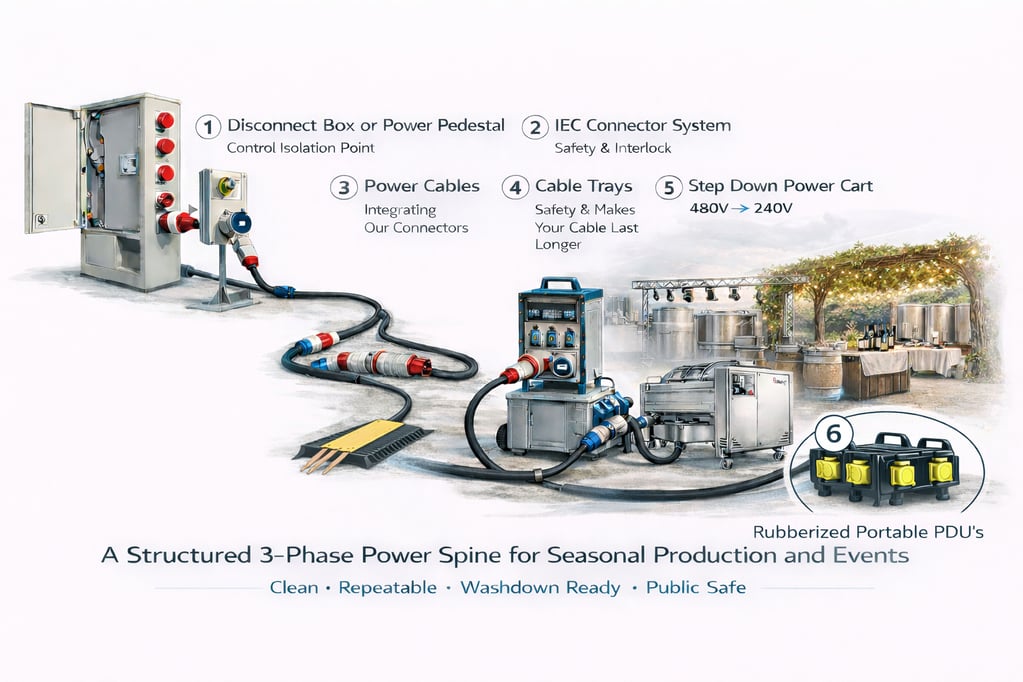
At Dynamic Measurement and Control Solutions, we help wineries build robust infrastructure that goes beyond individual components. We focus on power distribution, motor disconnects, connectors, and safety devices that are designed to withstand seasonal use, harsh washdown cycles, and real-world handling. For more on this, you can review some of the common electrical challenges in wineries.
If you are planning off-season upgrades or need to address electrical work before the next harvest, our team is here to help. We can walk you through the common points of failure and guide you toward proactive, reliable solutions.
To make this process easier, we have condensed the points above into a simple PDF. Use this checklist to guide your internal team or to coordinate with your electrical contractors.