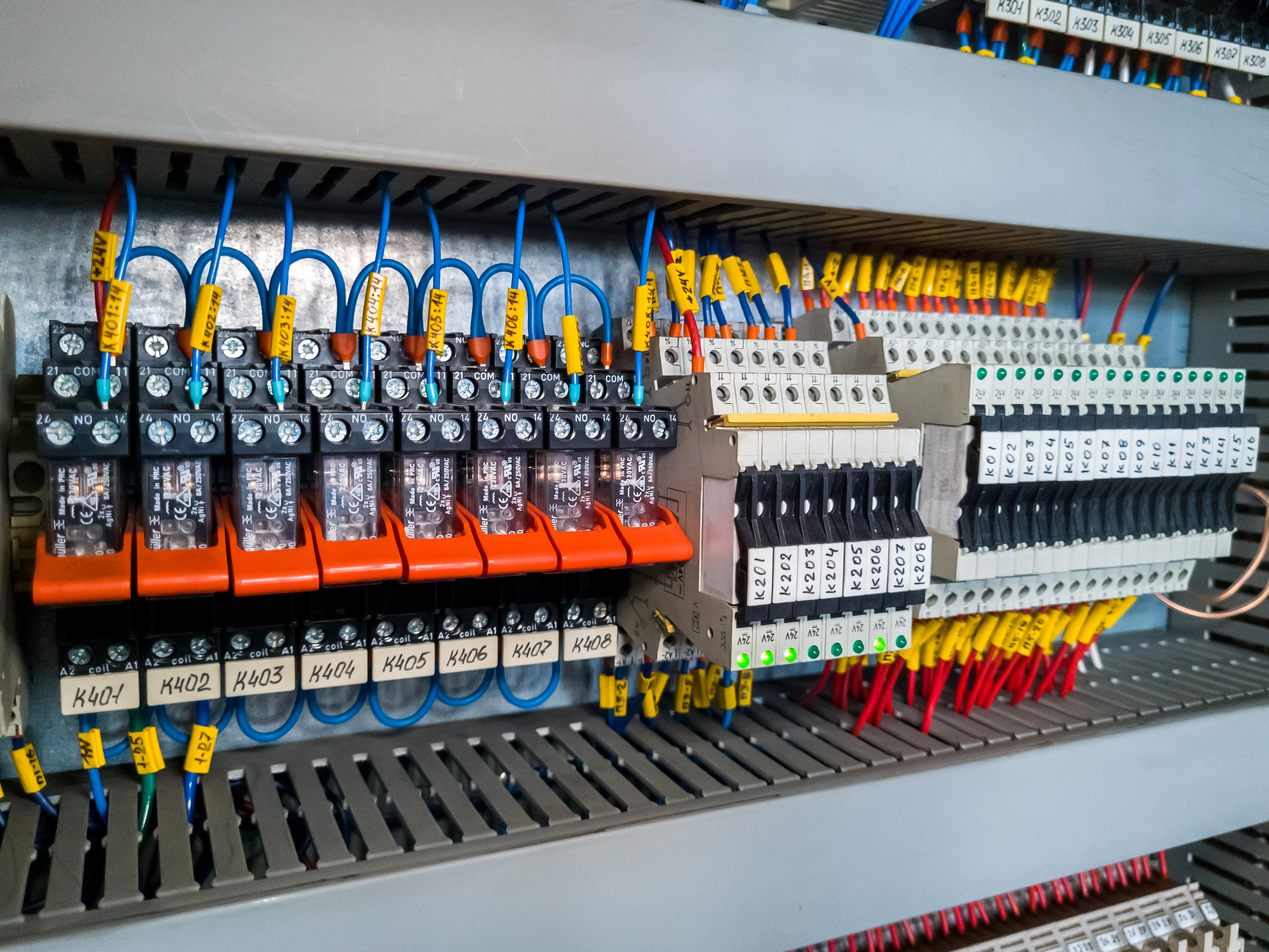
Most compliance problems do not show up at the final inspection. They show up in the first 10 percent of design. Panel spacing, power architecture, control voltages, enclosure decisions, wiring types, and short-circuit current rating are all locked in early. Once a machine is built and delivered, fixing them is expensive and disruptive.
A non-compliant panel can trigger hours of rework, a failed inspection by the Authority Having Jurisdiction, or a full NRTL field evaluation. It often means sending the machine back to the panel shop or having technicians make last-minute changes in the customer's facility. These are problems that should never get that far.
Dynamic supports OEMs at the beginning of the design process so engineers can avoid late-stage compliance problems. Our focus is early-stage guidance that keeps machines UL friendly and NFPA 79 aligned from day one.
The real reason compliance failures happen
 Most machines that fail UL 508A or NFPA 79 are not unsafe. They were designed without early consideration of the standards that govern:
- Panel construction
- Component selection
- Short-circuit current rating (SCCR)
- Wire types and routing
- Disconnect placement
- Grounding and bonding
- Safety circuits
- Thermal loads and enclosure sizing
By the time the machine is fully built, the cost of fixing these problems can be significant.
The three standards that matter most
 For industrial machinery shipped into the United States, these are the guiding rules, and they fit together by boundary.
NEC (NFPA 70)
Covers the building power system feeding the machine, including feeders, branch circuits, grounding, the disconnect on the wall, and the available fault current at the machine's terminals. Article 670 covers industrial machinery specifically and requires the machine nameplate.
UL 508A
Covers the control panel itself, including spacing, wire types, SCCR, component suitability, and construction rules, so the panel can be Listed as an assembly. Read more in our post on UL 508A and the importance of getting it right.
NFPA 79
Covers the electrical system of the machine from the supply terminals inward, including the supply disconnect, wiring methods, safety circuits, emergency stop, operator protection, and grounding. Read more in our post on NFPA 79 and how it applies to your machine.
Good machine design aligns with all three, and alignment starts early.
Why early-stage compliance saves time and money
 Late-stage compliance issues almost always trace back to early decisions. Examples include:
- Choosing components that are not certified to a standard UL 508A accepts for that position
- Underestimating SCCR and discovering the mismatch at the facility
- Using IEC-only parts that require a redesign for UL acceptance
- Using a UL 1077 supplementary protector where a UL 489 branch circuit breaker is required
- Drawing panels that cannot meet spacing or wiring requirements
- Selecting the wrong enclosure size or Type rating
- Choosing wiring types that NFPA 79 does not permit
- Designing safety circuits that require later rewiring
- Ignoring thermal loads until testing
These issues do not appear during assembly. They appear during design.
Catching them early eliminates redesign, rewiring, and surprise inspection failures.
Where Dynamic fits in the compliance process
 Dynamic is not a UL panel shop and not a retrofit contractor. Our value is upstream. We help machine builders make design decisions that prevent compliance friction later. We focus on:
- Component selection that aligns with UL 508A
- Power architecture choices that simplify SCCR requirements
- Early schematic review for control and protection circuits
- Thermal and enclosure planning
- Wiring and cable entry guidance
- Preventing IEC to UL conflicts
- Safety circuit alignment with NFPA 79
- Documentation and labeling considerations
Engineers stay fully in control of the design. We help guide decisions so the machine clears UL without the costs, delays, and drama.
Early-stage compliance checklist
This is the checklist OEMs can use during the concept and schematic phases.
Power architecture
- ☐ Confirm supply voltage and available fault current at the point of connection
- ☐ Define the SCCR target early, before components are selected
- ☐ Select fuses, breakers, and disconnects that are UL Listed for branch circuit use (UL 248, UL 489, UL 98)
- ☐ Validate the control voltage strategy (24 V DC, 120 V AC, or mixed) and its source
Component selection
- ☐ Choose parts certified to the standards in UL 508A Supplement SA, and confirm the Conditions of Acceptability of any Recognized Component
- ☐ Avoid IEC-only components unless they are also certified for North America
- ☐ Confirm wire and terminal types that meet UL construction rules
- ☐ Validate component temperature ratings against the expected enclosure ambient
Enclosure and thermal
- ☐ Select the correct enclosure Type rating for the environment
- ☐ Size the enclosure with space for wiring, spacing, and airflow
- ☐ Estimate the heat load
- ☐ Plan cable entry to maintain the Type rating and the separation of power and control
Panel layout and wiring
- ☐ Plan spacing for live parts according to UL 508A
- ☐ Separate power, control, and signal wiring routes
- ☐ Reserve space for grounding and labeling
- ☐ Ensure wire types, colors, and routing methods meet NFPA 79
Safety and control circuits
- ☐ Validate the E-stop chain and stop category
- ☐ Check all interlocks and control circuit protection
- ☐ Confirm grounding and bonding
- ☐ Align safety devices with NFPA 79 requirements
Documentation and labeling
- ☐ Start preliminary schematics early
- ☐ Build an initial UL-friendly bill of materials
- ☐ Create an SCCR documentation path
- ☐ Identify required labels and the machine nameplate data
This checklist helps teams avoid the issues that typically surface during UL evaluation or field inspection.

Why OEMs benefit from early compliance work
- Fewer drawing revisions
- Faster panel builds
- Clean UL 508A Listing
- Predictable inspections
- Reduced warranty exposure
- Less technician labor in the field
- Lower cost across repeat machine builds
- Better long-term serviceability
A machine that is UL friendly from day one is easier to build, easier to support, and more reliable in the field.
Supporting OEM engineers from the start
If you are in the concept or schematic phase of a new machine, Dynamic can provide early-stage guidance that simplifies your UL path and reduces surprises later. Whether you need help evaluating components, selecting enclosure and wiring systems, or validating an initial SCCR strategy, we can support your team before the design is locked in.

Go deeper
For the background on the standards named in this post, see what a UL certification is and why it matters, UL 508A and the importance of getting it right, UL 489 and how it should be applied, and NFPA 79 and how it applies to your machine.
Dynamic represents power, control, and connectivity lines for machine builders and panel shops in Northern California and Northern Nevada.
Working through a live design question?