
Designing or Evolving a DC Power System?
Get clarity on the switching decisions before you lock in hardware.
High-current DC switching is rarely straightforward. Arc behavior, fault response, and long-term reliability depend on more than ratings alone. Engineers come here for guidance, not just part numbers, and for confidence before systems are built.
In DC systems, switching and interruption are not forgiving. Unlike AC, DC current does not naturally pass through zero, which means arcs persist unless they are actively controlled.
Engineers often encounter issues such as:
Accelerated contact wear due to sustained DC arcing
Unpredictable failure modes in sealed or gas-filled contactors
Difficulty interrupting high current at elevated DC voltages
Challenges supporting bidirectional power flow
Poor visibility into the contactor condition over time
Late-stage design changes after field or test failures
These problems rarely appear on paper, but they surface quickly during commissioning, validation, or long-term operation.
| Design Concern | How Schaltbau Helps | What Dynamic Adds |
|---|---|---|
| Breaking high DC current | Engineered arc suppression and contact design | Helps you choose the right series & approach |
| Long duty cycles | Robust contact materials & design | Interprets performance vs needs |
| Safety & compliance | IEC-rated components with feedback options | Aligns selections with safety targets |
| Reliability over time | Proven in demanding real systems | Provides pattern-based guidance, not guesswork |
| Early design decisions | Purpose-built solutions | Early technical review and risk discussion |
Many contactors on the market are based on AC designs with modified ratings. While this approach can work at lower energy levels, it becomes risky as voltage, current, or duty cycle increases.
Without zero crossings:
Arcs persist longer and release more energy
Heat buildup becomes a limiting factor
Contact geometry and materials matter far more than nominal ratings
Sealed or gas-filled contactors are often assumed to be safer. In high-energy DC interruptions, sealing can trap heat and arc energy, limiting breaking capacity and hiding wear. During a short circuit, rapid gas heating can trigger an overpressure event that may cause the device to rupture under fast-fault conditions.
In high-energy DC systems, how a contactor fails is often more important than its advertised lifespan. Engineers need devices with predictable, inspectable behavior that supports maintenance and risk mitigation.
This is where application knowledge becomes just as important as the component itself.
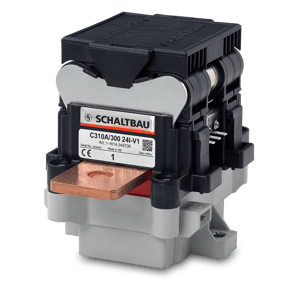
Building upon our experience in railway technology, Schaltbau produces highly reliable, outstanding contactors for all fields of use in which a load circuit has to be switched on and disconnected securely. Designed to IEC specifications, our wide variety of AC and DC contactors in stock range from contactors for low-voltage devices, such as batteries, through to high-voltage power contactors up to 3,000 V and 1,100 A.

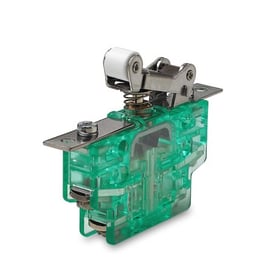
Snap-action switches, often called microswitches or limit switches, are electromechanical devices with a unique design that enables rapid actuation. These switches operate on a “snap-action” mechanism, meaning they quickly change state when a threshold of force is applied to the actuator. This distinctive characteristic makes them ideal for safety applications that require swift, precise switching.

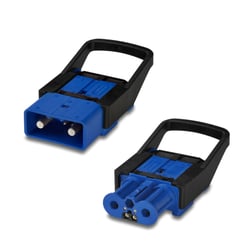
Connectors must ensure reliable transmission of energy and signals – coping with high voltages, harsh environments, and the rough conditions of rail traffic. Connectors from Schaltbau are specifically designed to meet these requirements: Where the safety and health of human beings depend on technology, as in transportation, mechanical engineering, lighting, food processing, battery charging, mining, or offshore operations, the rugged, heavy-duty connectors from Schaltbau are the first choice.

Schaltbau DC contactors are engineered specifically for high-energy DC applications that require controlled interruption, long service life, and predictable behavior.
Rather than sealing the arc inside the device, Schaltbau employs open-air, arc-chute designs that actively manage and extinguish arcs under demanding conditions.
High breaking capacity at elevated DC voltages and currents
Proven arc management using open-air arc chute technology
Support for bidirectional power flow architectures
Predictable wear patterns that can be inspected and understood
Long service life in applications with frequent switching or high fault energy
These designs are well-suited for systems where reliability, safety, and maintainability cannot be compromised.
Engineers who work with us find they understand why the solution works, not just what it is ...
Access hidden features, avoid design traps

Support from initial design, installation, troubleshooting, and post-sales

Smarter choices, fewer failures, faster product launches

Your system voltage and current profiles
Load characteristics and duty cycles
Arc energy concerns and switching frequency
Pre-charge, inrush, and fault scenarios
Safety, serviceability, and longevity expectations
Real design constraints and environmental conditions
This is not a sales call. It is a technical conversation aimed at reducing uncertainty before designs are finalized.
Whether Schaltbau is the right fit for your application
Which DC contactor architectures make sense for your system
The most important design tradeoffs to consider
How to avoid common DC switching pitfalls before they show up in testing or the field
Our role is to help you validate decisions early, when changes are inexpensive, and confidence matters most.