
Designing or Evolving a DC Power System?
Let’s Talk Through the Critical Decisions Before You Commit.
Breaking and controlling high-current DC loads is more complicated than it looks. If your system involves DC arc management, safety margins, or reliability under load, this is where you get guidance, not just part numbers.
Engineers come here because they want confidence before they build. They want human insight, someone who has been in the trenches with DC power systems and can frame the choices in the context of real-world designs.
These are not commodity parts; they are purpose-engineered power components with predictable behavior in demanding environments.
The right DC power switching approach starts with understanding the interaction between electrical behavior and mechanical design, not just a datasheet.
Breaking DC current is fundamentally different from breaking AC:
What Engineers Rely On:
Engineered Arc Suppression: Magnetically assisted arc chambers reduce contact wear and increase life.
High DC Capability: Solutions that handle high voltages and currents, including bi-directional battery systems.
Safety First: Built to stringent IEC standards with feedback and fail-safe mechanisms.
Proven Reliability: Used in rail, industrial, battery storage, EV charging, and heavy machinery where failures are not an option.
We are not here to sell you Schaltbau parts.
We're here to help you understand them in the context of your design.
What We Bring to the Table
Engineer-to-Engineer Insight
We speak your language and think in terms of system tradeoffs, safety risk, and real performance, not stock levels.
Curated Recommendations
Based on your voltage, current, duty cycle, and safety requirements, we help you pick the right product — not just any product.
Application Experience
We’ve supported hundreds of DC systems and seen what works and what doesn’t in real machines and power architectures.
Reduced Risk
Early consultation prevents late surprises, redesign costs, and field issues.
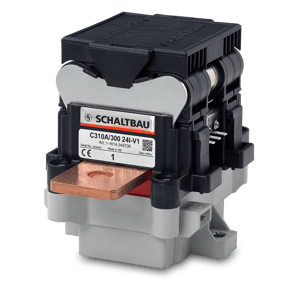
Building upon our experience in railway technology, Schaltbau produces highly reliable, outstanding contactors for all fields of use in which a load circuit has to be switched on and disconnected securely. Designed to IEC specifications, our wide variety of AC and DC contactors in stock range from contactors for low-voltage devices, such as batteries, through to high-voltage power contactors up to 3,000 V and 1,100 A.

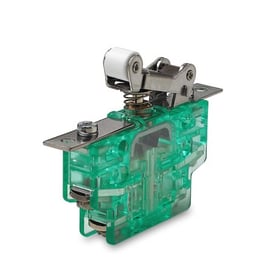
Snap-action switches, often called microswitches or limit switches, are electromechanical devices with a unique design that enables rapid actuation. These switches operate on a “snap-action” mechanism, meaning they quickly change state when a threshold of force is applied to the actuator. This distinctive characteristic makes them ideal for safety applications that require swift, precise switching.

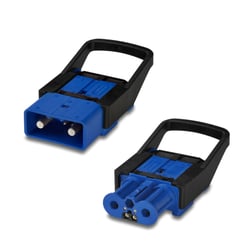
Connectors must ensure reliable transmission of energy and signals – coping with high voltages, harsh environments, and the rough conditions of rail traffic. Connectors from Schaltbau are specifically designed to meet these requirements: Where the safety and health of human beings depend on technology, as in transportation, mechanical engineering, lighting, food processing, battery charging, mining, or offshore operations, the rugged, heavy-duty connectors from Schaltbau are the first choice.

Your system voltage and current profiles
Load characteristics and duty cycles
Arc energy concerns and switching frequency
Safety, serviceability, and longevity expectations
Real design constraints and environmental conditions
Whether Schaltbau makes sense for your application
What design tradeoffs matter most
How to avoid common DC switching pitfalls
| Design Concern | How Schaltbau Helps | What Dynamic Adds |
|---|---|---|
| Breaking high DC current | Engineered arc suppression and contact design | Helps you choose the right series & approach |
| Long duty cycles | Robust contact materials & design | Interprets performance vs needs |
| Safety & compliance | IEC-rated components with feedback options | Aligns selections with safety targets |
| Reliability over time | Proven in demanding real systems | Provides pattern-based guidance, not guesswork |
| Early design decisions | Purpose-built solutions | Early technical review and risk discussion |
Engineers who work with us find they understand why the solution works, not just what it is ...
Access hidden features, avoid design traps

Support from initial design, installation, troubleshooting, and post-sales

Smarter choices, fewer failures, faster product launches