
The questions this chapter settles
From the sensor to the screen that polls itThe customer asks for production data after the machine is built, and the plant asks what the machine draws after the bill arrives. These six decisions put both answers on the drawing, with the controller untouched.
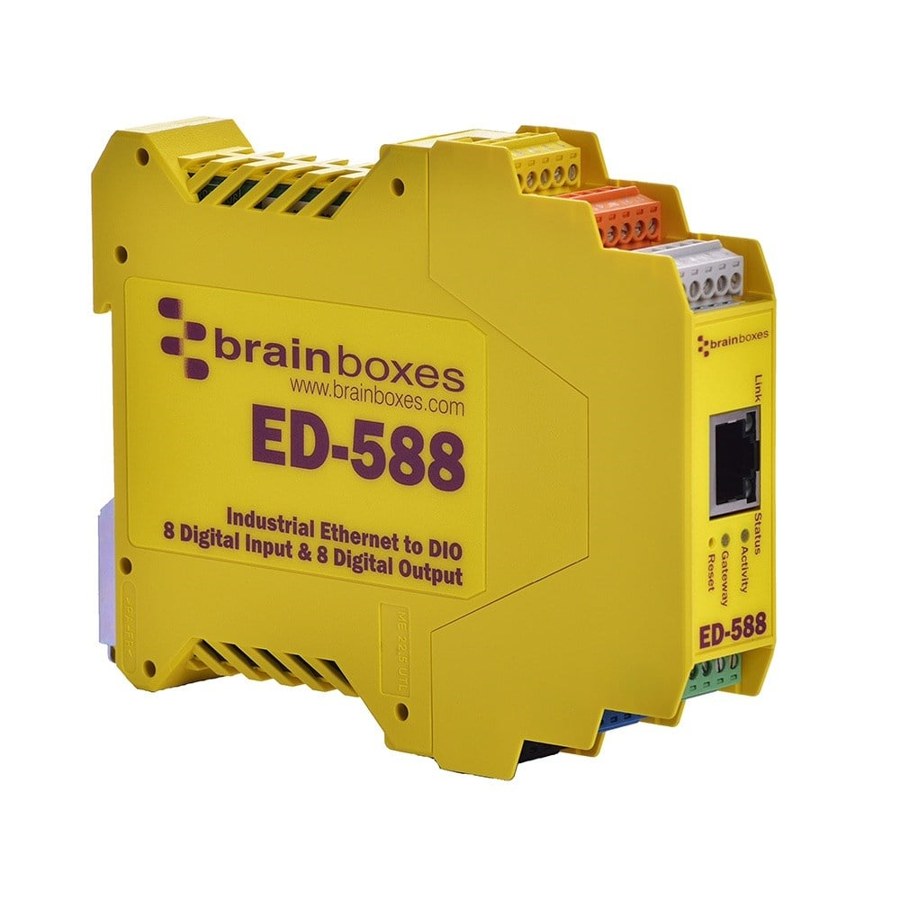
How do I get data off a machine without rewriting the PLC?
Put remote I/O beside the controls. It reads run states, counts and temperatures at the sensor and presents them on the network, so the controller you validated is never opened and what was validated stays validated.
Brainboxes ED-588, ED-593 and ED-582 Ethernet remote I/O. Analog, digital, RTD and thermocouple inputs presented as Modbus TCP devices the customer's own software polls. A pushbutton or a foot switch is a digital input too.
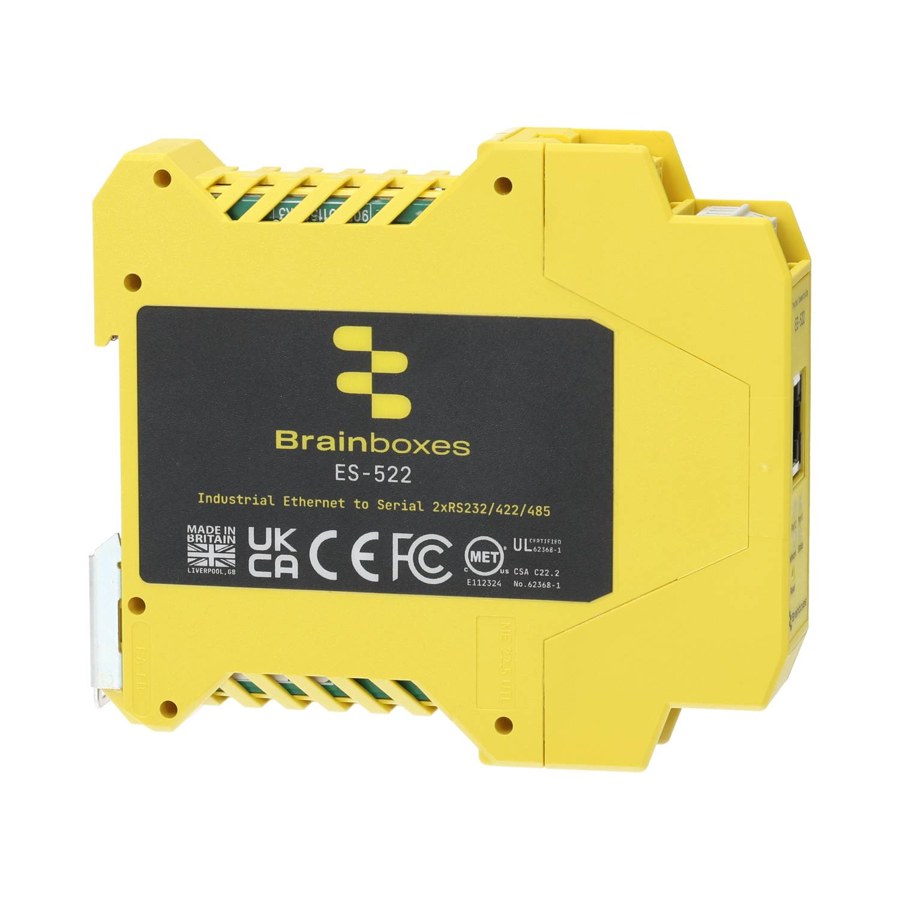
The instrument only has an RS-232 or RS-485 port. Can it go on the network?
Yes, and nothing in the software changes, which is where these projects usually die. The serial port goes onto Ethernet and the plant PC still sees the same COM port.
Brainboxes Ethernet to serial converters. PoE, DB9 and industrial versions; the old line with only a serial port joins the network through it, and the control code is untouched.
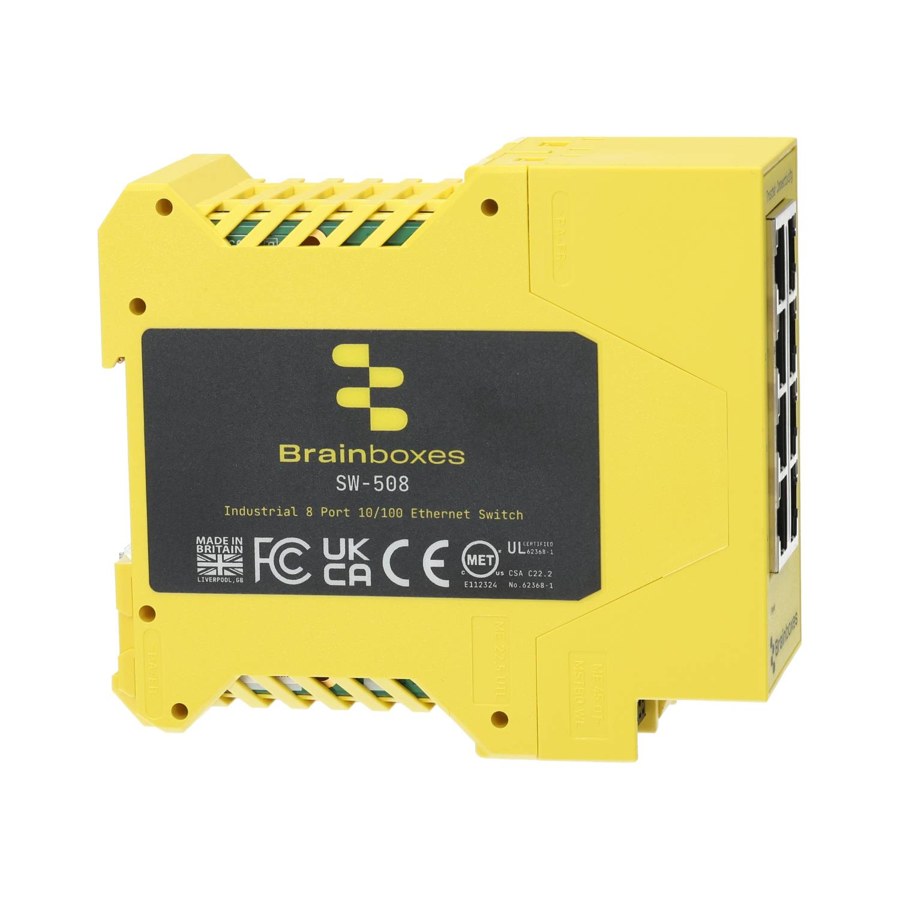
Which switch goes inside the panel, and what about inside the product?
An office switch is built for a desk. The one in the panel takes the temperature, the DIN rail and the vibration; the one inside your product is a board the size of a paperclip.
Brainboxes industrial Ethernet switches. Fast Ethernet, gigabit and PoE, 4, 5 and 8 port, embedded through case hardened. Board-level switching 55 by 55 by 10 millimeters, rated -40 to +85 C, designed into the enclosure instead of bolted on.
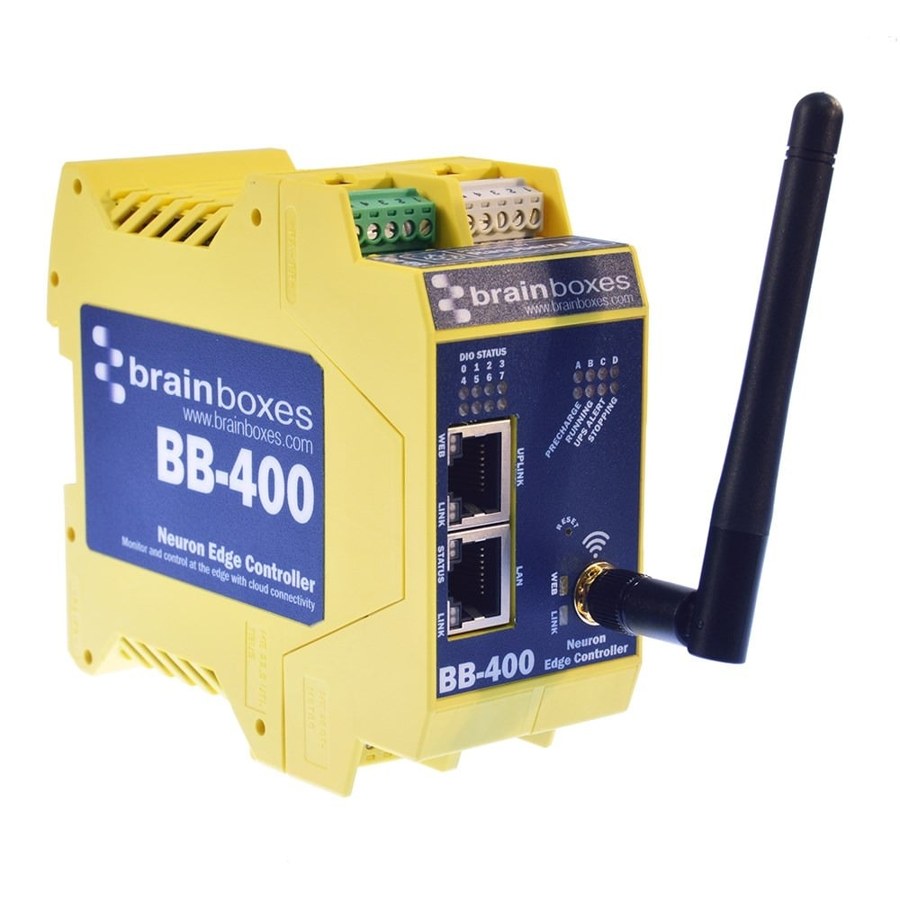
Where does the logic live when the PLC cannot be touched?
On an edge controller beside it. The data layer sits next to the control system and moves information up to MES, historians and dashboards without interfering with machine operation.
Brainboxes BB-400 edge controller. A Raspberry Pi based industrial edge computer with I/O, serial and Ethernet on one DIN-rail unit. The edge computer is the place to put the counting, the buffering and the protocol work the PLC should not carry.
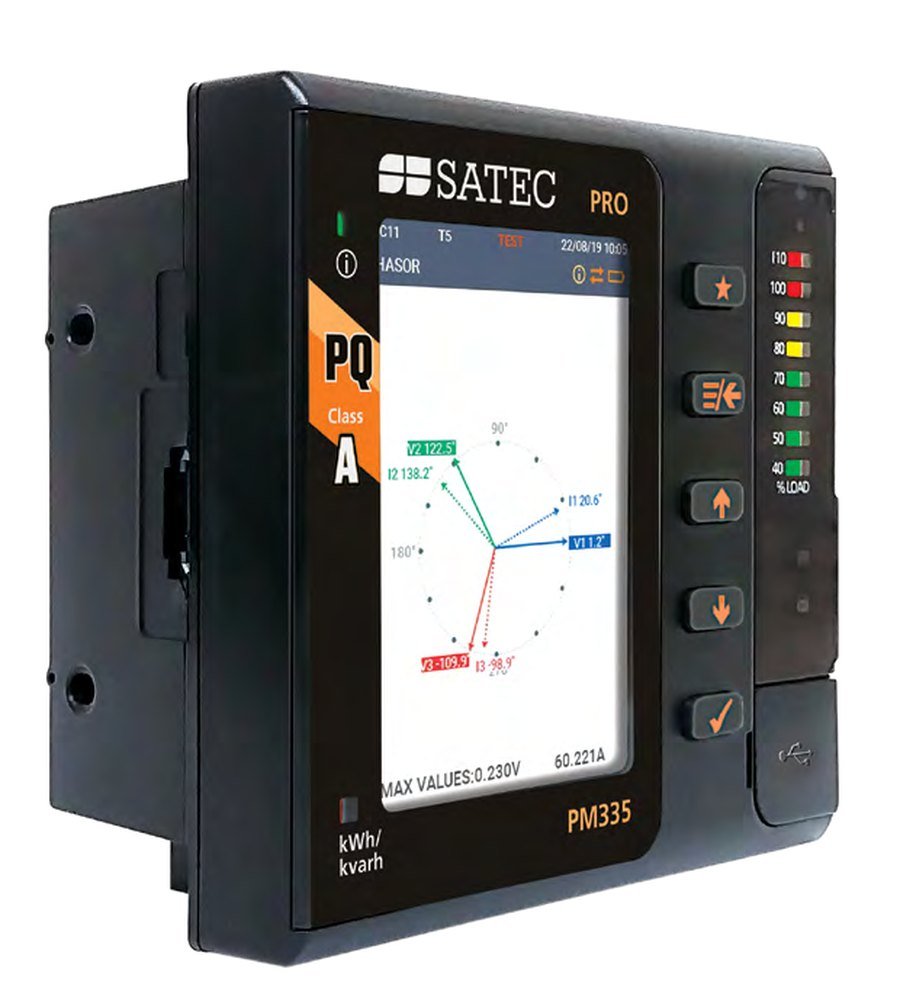
What does the machine actually draw, and what did the supply look like when it tripped?
A meter at the entry answers both. The kWh per cycle your customer asks for is measured, not modeled, and the sag that tripped the machine at shift change has a time and a depth on file.
SATEC PRO series and PM17x power quality analyzers. A Class 0.2S revenue meter and a Class A Edition 3.1 power quality analyzer in one device, harmonics to the 63rd, every event stamped to 1 microsecond, waveform capture and fault recording.
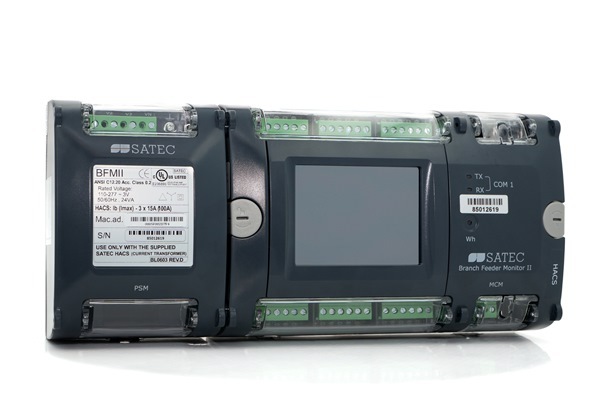
Which branch trips, and does anyone know why?
Feeder monitoring across the branches, added after commissioning if it has to be. The service was sized for the whole site and the total is all anyone has until each feeder gets its own kWh.
SATEC BFM-II branch feeder monitor and HACS current sensors. Up to 54 single-phase or 18 three-phase circuits from one DIN-rail unit, channels added later. HACS sensors feed the meter directly, one CT in the chain instead of two. DC metering to 1,500 V for storage and charging.