Picture this ...
Your team ships a machine you have been refining for months. The mechanical design is dialed in, the software is tight, and commissioning should be routine. But as soon as the equipment lands at the customer site, the cracks start to show.
A power supply runs hot and needs extra derating, the network switch drops packets under load, and a simple I/O expansion requires a custom adapter because the legacy module you used is no longer available. Nothing is failing outright, yet everything feels slower, heavier, and harder to modify. Your customer does not see “clever engineering”, they see friction.
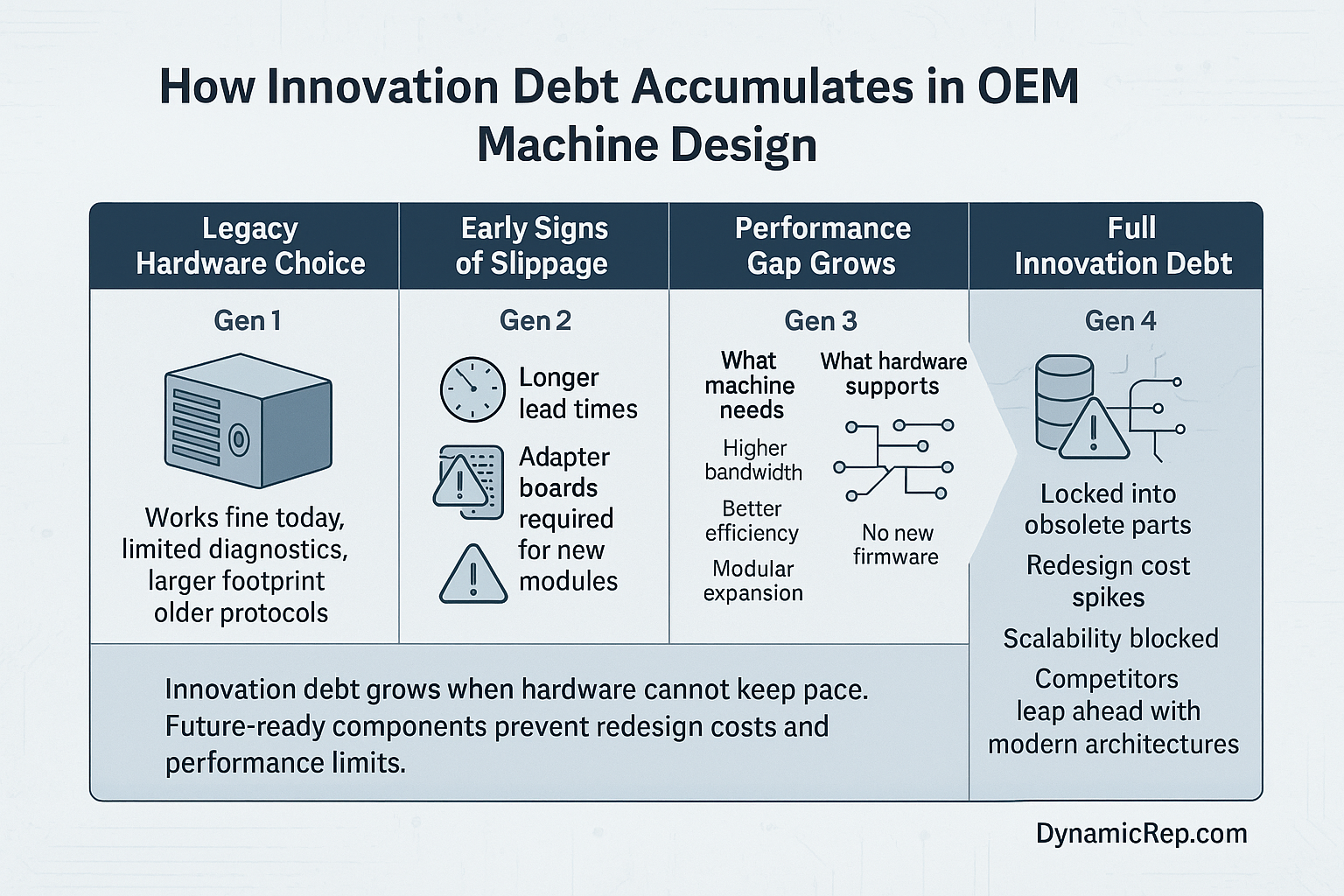
This is how innovation debt builds. Not overnight, and not because anyone made a bad design choice. It happens because hardware that once felt safe and familiar stops keeping pace with the speed, density, and reliability that modern production lines expect. Each design cycle that leans on outdated components quietly erodes machine performance, limits upgrade paths, and forces your team into workarounds that should not exist in 2025.
If your goal is to design machines that last through multiple generations of production, then the real risk is not failure, it is getting locked into hardware that cannot evolve with you.
This post breaks down how innovation debt accumulates, why it silently undermines machine performance, and how OEMs can stay ahead of it by making future-ready hardware decisions early in the design process.
 Engineers and machine builders spend years mastering a particular brand of hardware.
You learn its nuances, its limits, and how to extract every bit of performance. That expertise becomes a valuable asset. But what happens when that trusted brand stops keeping pace with the market? What happens when the innovation that once made them a leader slows to a crawl?
This is where a hidden risk emerges, something I call "Innovation Debt." It’s not about the code inside your machine, but the physical components that give it life. While you’re busy building the next generation of equipment, the legacy hardware you rely on can quietly begin to erode your machine’s performance, reliability, and competitive edge.
What Is Innovation Debt?
Most engineers are familiar with "technical debt"—the implied cost of rework caused by choosing an easy, limited solution now instead of using a better approach that would take longer. Innovation debt is different. It’s an external risk that builds up when a component supplier fails to evolve its product lines, leaving you designed into a corner.
Innovation debt is the compounding cost of designing systems around hardware that is no longer being actively improved. While the components may still function, they anchor your designs to yesterday’s standards. Reshoring, automation, and AI are reshaping manufacturing expectations. OEMs are demanding smarter machines, better power efficiency, and flawless connectivity. Sticking with a supplier that isn’t investing in these areas means you’re accumulating a debt that will eventually come due, often in the form of unplanned downtime, lost opportunities, or a full-scale redesign.
The Compounding Cost of Stagnant Hardware
The real danger of innovation debt is that its costs are rarely obvious until it’s too late. It starts small but compounds over time, creating unseen risks that can derail a project or even an entire product line.
- Performance and Efficiency Gaps
Newer components often deliver significant gains in power density, data throughput, and thermal efficiency. A power supply from five years ago might be twice the size of a modern equivalent with the same output. A legacy Ethernet switch may lack the diagnostic features needed for today’s deterministic networks. By sticking with older hardware, you force your design team to work around limitations that your competitors have already solved. This can lead to bulkier, less efficient machines that are more expensive to run and harder to service.
- Integration and Scalability Challenges
Modern machine design requires seamless integration. Components need to communicate effectively, from the power entry point to the HMI. When a supplier’s product line stagnates, it often falls behind on modern communication protocols or modular designs. What was once a simple, scalable architecture can become a complex puzzle of adapters, converters, and custom workarounds. This not only increases build complexity and cost but also introduces new points of failure.
- Supply Chain Vulnerability
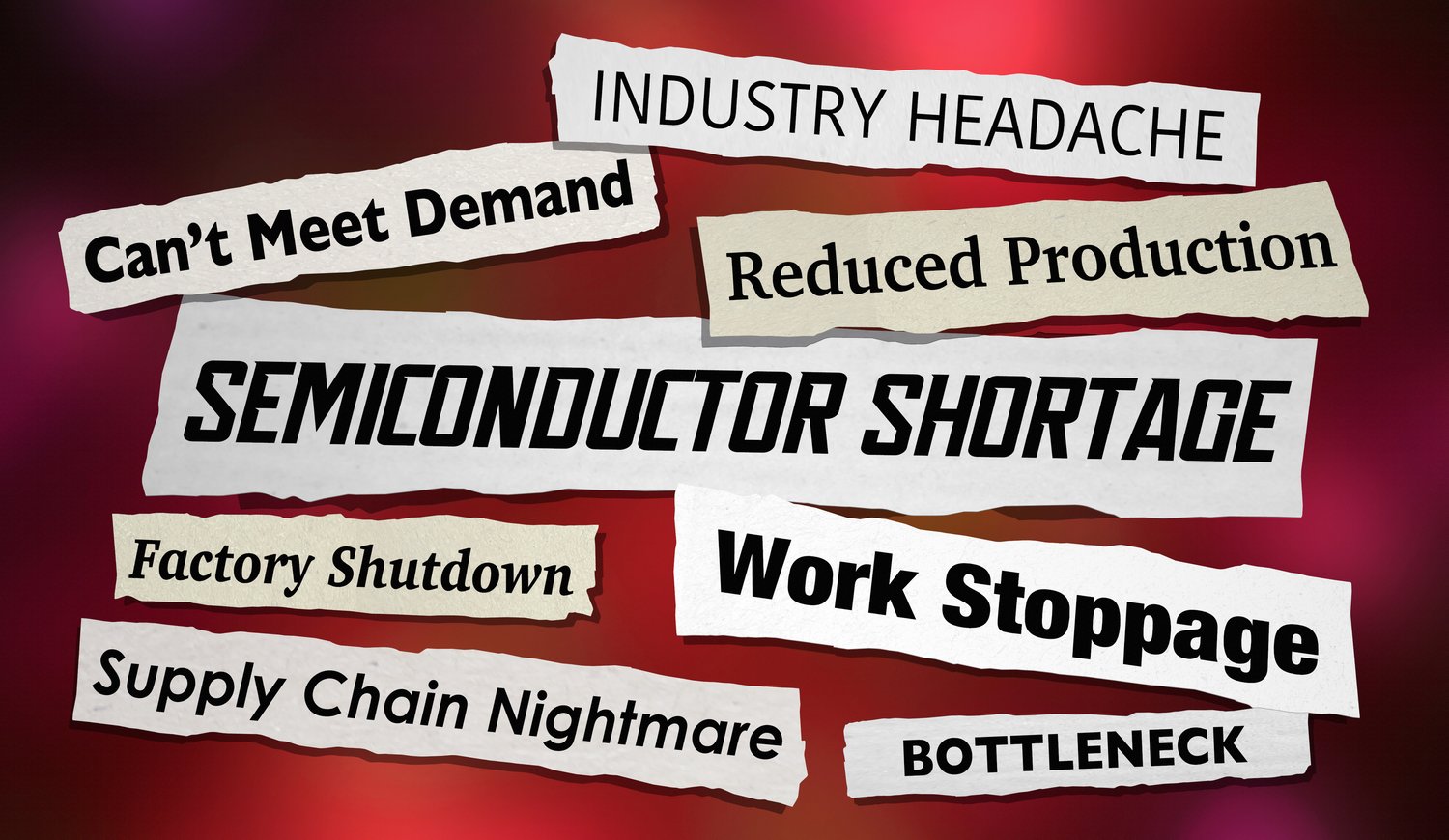
Suppliers who stop innovating are often the first to experience supply chain disruptions. They may de-prioritize older product lines, leading to longer lead times and unpredictable availability. Relying on a single, stagnant supplier for a critical component is a significant risk. A sudden end-of-life (EOL) announcement can force you into a costly and time-consuming redesign, while your competitors with more resilient supply chains move forward.
Early Indicators of Innovation Debt
So, how can you spot innovation debt before it causes a major problem? The signs are often subtle, but they are there if you know what to look for. My role is to bridge the gap between component suppliers and machine builders, and I’ve seen these patterns emerge time and again.
Here are a few key indicators:
- Lack of a Clear Product Roadmap: Does the supplier have a visible, forward-looking roadmap? Or are new product announcements rare and focused only on minor, incremental updates? A healthy supplier is excited to share its vision for the future. Silence is a red flag.
- Lengthening Lead Times: Are lead times for core products getting longer without a clear explanation? This can indicate that the manufacturer is shifting production focus to newer lines or is struggling to maintain its supply chain for legacy components.

- Minimalist Updates: When new versions are released, are they truly innovative? Or are they just minor tweaks, like a new housing color or a slightly different connector, without any real performance improvements?
- Focus on Cost Reduction Over Performance: A supplier that is competing solely on price may be cutting corners on R&D. While cost is always a factor, a singular focus on being the cheapest option can be a sign that innovation has taken a backseat.
3 steps you Can take Today
If you suspect parts of your design may be carrying innovation debt, you do not have to overhaul an entire machine to make progress. A few simple steps can help you understand where the real risks are and what to address first.
1. Review your critical components for upgrade paths
Look at the hardware making the biggest impact on machine performance, reliability, and scalability. Check whether your suppliers publish meaningful roadmaps, firmware updates, or next-generation versions. If the answer is unclear, that is usually the first red flag.
2. Evaluate where your architecture is constrained
Identify the areas where the machine feels “boxed in”, for example: thermal limits, networking bottlenecks, limited diagnostics, scarce I/O, or parts with long lead times. These constraints grow slowly, but they compound over multiple build cycles.
3. Bring in a partner early in your next design cycle
You do not need a full redesign to avoid innovation debt, you need the right hardware options on the table from the beginning. This is where Dynamic can help. We support engineers with early-stage component selection so your machine has room to evolve across future generations.
Diversify Before It’s Too Late
The future belongs to teams that design smarter, more resilient machines. Meeting the demands of modern manufacturing requires a proactive approach to component selection. It’s not just about finding a part that works now; it’s about choosing a partner who will help you stay competitive for years to come.
This is where Dynamic helps. We bring an engineering-first mindset to component selection, with access to a portfolio of high-performance suppliers across power, control, data, and thermal management. We help OEMs and integrators identify the early signs of innovation debt and diversify their hardware options before downtime or obsolescence becomes a critical issue.
If you’re building machines for the next phase of manufacturing, you can’t afford to let legacy hardware hold you back. Let’s talk about how to build a more resilient and future-proof design.